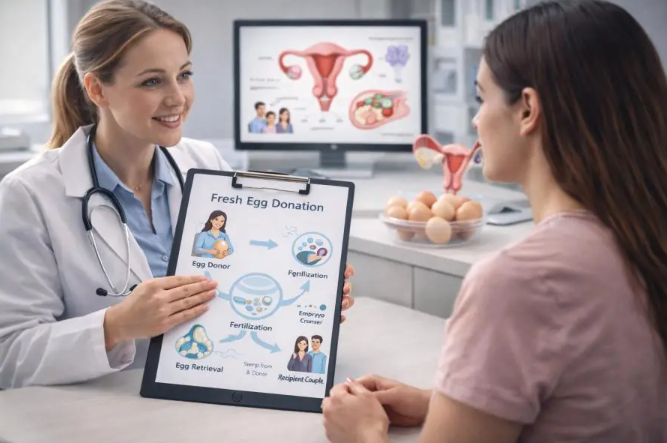

For thousands of couples and individuals struggling with infertility due to poor egg quality, premature ovarian failure, or age-related decline in fertility, donor egg IVF has become a beacon of hope. India has emerged as one of the most sought-after destinations for this treatment, attracting patients from across the globe because of its skilled fertility specialists, advanced laboratories, and significantly lower treatment expenses compared to Western countries. If you are exploring this path to parenthood, understanding every aspect of the process, from medical eligibility to the donor egg ivf cost in india, can help you plan your journey with clarity and confidence.
What Is Donor Egg IVF?
Donor egg IVF is a form of assisted reproductive technology in which eggs from a healthy, screened donor are fertilized with sperm (either from a partner or a sperm donor) in a laboratory setting. The resulting embryo is then transferred into the intended mother’s or a gestational carrier’s uterus. This approach is recommended when a woman’s own eggs are unlikely to result in a successful pregnancy, whether due to age, diminished ovarian reserve, genetic concerns, or previous failed IVF cycles using her own eggs.
Unlike conventional IVF, donor egg IVF removes the variable of egg quality from the equation, which is often the single biggest factor influencing IVF success rates in women over 38 or those with compromised ovarian function. This is precisely why so many patients who have experienced repeated implantation failure or multiple unsuccessful IVF attempts turn to donor eggs as their next step.
See also: Fashion Brand Storytelling Techniques
Who Should Consider Donor Egg IVF?
Several groups of patients are typically advised to consider this treatment route:
- Women with premature ovarian insufficiency or early menopause
- Women above 40 with diminished ovarian reserve
- Patients who have undergone chemotherapy or radiation affecting ovarian function
- Individuals with genetic disorders that could be passed on through their own eggs
- Women who have experienced multiple failed IVF cycles using their own eggs
- Same-sex male couples or single fathers using a gestational surrogate
A thorough consultation with a fertility specialist, including hormonal testing and an ultrasound evaluation of ovarian reserve, is essential before deciding whether donor egg IVF is the right option.
The Donor Egg IVF Process Explained
The journey typically unfolds in several structured stages:
1. Initial Consultation and Diagnostic Testing: The process begins with a detailed fertility workup, including blood tests, ultrasound scans, and a review of medical history for both partners. This helps the medical team understand the underlying cause of infertility and confirm that donor eggs are the appropriate solution.
2. Donor Selection: Fertility clinics in India maintain databases of pre-screened, anonymous egg donors who have undergone rigorous physical, psychological, and genetic screening. Patients can often review donor characteristics such as physical traits, educational background, and blood group to find a suitable match.
3. Synchronization of Cycles: The donor undergoes ovarian stimulation with fertility medications to produce multiple mature eggs, while the recipient’s uterine lining is prepared with hormonal medications to optimize receptivity for embryo implantation.
4. Egg Retrieval and Fertilization: Once the donor’s eggs reach maturity, they are retrieved through a minor surgical procedure and fertilized in the lab with sperm using conventional IVF or ICSI techniques.
5. Embryo Culture and Transfer: The resulting embryos are cultured for three to five days, and the healthiest embryo (or embryos) are selected for transfer into the recipient’s uterus. Any remaining viable embryos can be frozen for future use.
6. Pregnancy Confirmation: Approximately two weeks after the embryo transfer, a blood test confirms whether implantation has been successful.
Factors That Influence the Cost of Donor Egg IVF in India
Many patients researching this treatment want a clear breakdown of expenses before committing to a clinic. Several variables affect the total expenditure:
Donor Compensation and Screening Fees: Egg donors undergo extensive medical, genetic, and psychological evaluations, and they receive compensation for their time and the physical demands of the egg retrieval process. This is typically one of the larger components of the overall bill.
Ovarian Stimulation Medications: Both the donor and recipient require hormonal medications, and the cost can vary depending on the brand, dosage, and duration of the stimulation protocol.
Laboratory and Embryology Charges: Advanced laboratory techniques such as ICSI, embryo culturing, and pre-implantation genetic testing (if opted for) add to the overall cost but can significantly improve success rates.
Clinic Reputation and Location: Costs can vary between metro cities like Delhi, Mumbai, Bangalore, and Hyderabad versus smaller cities, largely due to differences in overhead costs and demand.
Fresh vs. Frozen Donor Eggs: Some clinics offer frozen donor egg banks, which tend to be more cost-effective and quicker than coordinating a fresh donor cycle, since there is no need to synchronize cycles between donor and recipient.
Number of Embryo Transfer Attempts: If the first embryo transfer is unsuccessful, additional frozen embryo transfer cycles will add to the cumulative expense, though these are usually far less expensive than a fresh cycle.
Additional Medical Procedures: Conditions such as a thin uterine lining, fibroids, or other uterine abnormalities may require corrective procedures before embryo transfer, which can influence the final cost.
For a detailed, itemized breakdown of expected charges at each stage of treatment, many patients find it useful to review a dedicated resource on donor egg ivf cost in india, which outlines typical price ranges across different cities and clinic tiers.
Why India Is a Preferred Destination for Donor Egg IVF
India’s appeal as a fertility tourism hub rests on several pillars:
Affordability Without Compromising Quality: Treatment costs in India are often a fraction of what patients would pay in the United States, United Kingdom, or parts of Europe, while clinical outcomes remain comparable due to the use of internationally trained embryologists and modern laboratory equipment.
Experienced Fertility Specialists: Many Indian reproductive endocrinologists have trained or worked abroad and bring globally recognized expertise to their practice, supported by continuous exposure to a high volume of complex cases.
Shorter Waiting Times: Unlike some countries where donor egg waiting lists can stretch for over a year, Indian clinics typically maintain larger donor pools, allowing for faster matching and quicker initiation of treatment.
Comprehensive Support Services: Reputable clinics often provide end-to-end assistance for international patients, including visa support, accommodation arrangements, language interpretation, and coordinated travel planning alongside the medical protocol.
Legal Framework: India has established regulations governing assisted reproductive technology, including donor anonymity and consent protocols, which provide a structured and legally sound environment for patients pursuing donor egg treatment.
Tips for Choosing the Right Clinic
Selecting the right fertility centre is one of the most important decisions in this journey. Consider the following factors:
- Verify the clinic’s success rates with donor egg cycles specifically, not just overall IVF statistics
- Ask about the donor screening protocol, including genetic and infectious disease testing
- Inquire whether the clinic uses fresh or frozen donor eggs and the implications for timing and cost
- Request transparent, itemized cost estimates before beginning treatment to avoid unexpected expenses
- Check patient reviews and testimonials, particularly from international patients
- Confirm the qualifications of the embryology team, since lab expertise significantly impacts success rates
- Ask about post-transfer support, including medication protocols and follow-up care
Emotional Considerations Throughout the Journey
Choosing donor egg IVF is not only a medical decision but also an emotional one. Many intended parents experience a mix of relief and grief: relief at finding a viable path to parenthood, and grief over not being able to use their own genetic material. It is completely normal to process complex feelings throughout this journey, and many clinics now offer counselling support to help patients and their partners navigate these emotions before, during, and after treatment.
Open communication between partners, realistic expectations about success rates, and a strong support system, whether through counselling, support groups, or trusted friends and family, can make a meaningful difference in how patients experience this process.
Final Thoughts
Donor egg IVF offers renewed hope to individuals and couples for whom conventional IVF has not succeeded, providing a scientifically proven pathway to biological parenthood even when egg quality is no longer viable. India’s combination of skilled medical professionals, modern infrastructure, and significantly lower costs has made it an increasingly popular choice for patients worldwide.
Before beginning treatment, it is wise to consult multiple clinics, ask detailed questions about protocols and pricing, and seek a transparent understanding of all charges involved. Researching the donor egg ivf cost in india in advance allows patients to budget appropriately and avoid financial surprises partway through their treatment journey. With the right clinic, a well-matched donor, and realistic expectations, donor egg IVF can be a transformative step toward building the family you have been hoping for.


 By
By