
Pest control prices in Singapore may begin at about S$140 for a straightforward one-off ant or cockroach treatment in an HDB flat. Bed bug and rodent programmes can cost several hundred dollars, while termite and mosquito services are usually priced only after the property has been inspected.
These figures are useful for planning, but Singapore does not have an official nationwide pest-control price list. The final quotation depends on the pest species, property type, infestation severity, accessibility, treatment method and number of visits required.
Price should not be considered in isolation. A low-cost application may kill the pests that can be seen without reaching the colony, breeding source or entry route behind the problem. Some minor infestations can be managed in one targeted appointment, but termites, bed bugs, rodents and recurring cockroach activity frequently require monitoring and follow-up.
Property owners should therefore understand what is included in a quotation, why treatment methods differ and which regulatory requirements apply in Singapore. This makes it easier to compare providers fairly instead of choosing solely according to the lowest advertised price.
Pest-Control Costs in Singapore at a Glance
Pest-control providers set their own rates according to the work required. A price published by one company should therefore be treated as an example rather than a universal Singapore market rate.
As one transparent reference, Aardwolf Pestkare’s published HDB pricing guide provides the following indicative figures:
| Pest or programme | Example published price | Indicative scope |
| Cockroach or ant treatment | About S$140 | One treatment visit |
| Annual cockroach or ant plan | About S$520 | Six visits across 12 months |
| Bed bug treatment | About S$450–S$600 | Usually two visits, depending on flat size |
| Rodent-control programme | About S$450 | Four visits over approximately four weeks |
| Termite treatment | Inspection required | Depends on the termite species, affected area and treatment method |
| Mosquito control | Quoted case by case | Depends on breeding sites, resting areas and property layout |
The published guide lists approximately S$140 for a one-off ant or cockroach treatment, S$520 for six visits over a year, S$450 to S$600 for a two-visit bed bug package and about S$450 for a four-visit rodent programme. These are provider-specific planning figures rather than independently surveyed market averages.
Termite and mosquito services are harder to price without inspecting the premises. A localised drywood-termite problem affecting an accessible timber feature is different from subterranean termite activity connected to the soil beneath a landed property. Likewise, mosquito treatment for a balcony cannot be priced in the same way as a programme covering gardens, drains, roof gutters and shaded vegetation.
Published prices can help establish an initial budget, but the final quotation should reflect the property and the actual extent of the infestation.
Why Pest-Control Quotations Vary
Two quotations may look similar while covering very different levels of work.
One provider may quote for a single application in the room where the pest was observed. Another may include a broader inspection, treatment of adjoining areas, monitoring devices and several return visits. Comparing only the total price can therefore create a misleading impression.
The pest species is one of the main pricing factors. Ant baiting, cockroach gel treatment, rodent trapping, termite monitoring and bed bug heat or steam treatment require different materials, equipment and treatment schedules. Pests concealed inside timber, wall voids or ceiling spaces usually require more investigative work than pests confined to an accessible surface.
Property size and layout also matter. A compact HDB flat generally takes less time to inspect than a multi-storey landed home, commercial kitchen, factory or warehouse. Larger premises usually contain more possible harbourages and entry routes, including built-in cabinets, false ceilings, gardens, loading areas, external drains and roof spaces.
Floor area alone does not determine the workload. A smaller flat with extensive cabinetry and bed bugs across several bedrooms may require more work than a larger home with one isolated ant trail.
Infestation severity affects the amount of product, equipment and follow-up required. Early activity limited to one area is normally easier to manage than an infestation that has spread through several rooms or structural spaces.
The number of pests seen does not always reveal the scale of the problem. Termites may remain hidden inside timber, rodents can nest above ceilings, and bed bugs may spread beyond the room where bites were first noticed. Frequent daytime cockroach sightings can also indicate that concealed harbourages have become crowded.
Accessibility can increase labour requirements. Treatment becomes more complicated when activity is located behind fixed furniture, beneath flooring, inside structural timber or above an inaccessible ceiling. Commercial and industrial sites may introduce additional requirements, including contractor registration, safety inductions and treatment outside normal operating hours.
The recommended treatment method can further affect the price. Gel bait, traps, steam, heat, residual applications and monitoring stations involve different materials and levels of labour. A more expensive method may be recommended because the infestation is concealed or because broad spraying would be unsuitable around food, children, pets or sensitive equipment.
The number of visits included is equally important. Rodent traps and bait stations require repeated checking. Termite stations need ongoing monitoring, while bed bug programmes often include a follow-up because eggs may hatch after the first appointment.
A multi-visit programme may cost more initially, but it can provide better value than repeatedly purchasing isolated treatments that do not resolve the underlying source.
Ant Control: Prices and Treatment
Ant and cockroach services generally sit at the more affordable end of residential pest control. Based on the published HDB reference used in this guide, a one-off ant treatment may begin at approximately S$140.
The final price depends on the ant species, colony location, number of active trails and whether ants are entering from outside the property. Some colonies are established behind cabinets, within wall voids or around utility openings. Others may be located in corridors, planters, adjoining units or external walls.
The ants visible on a countertop are usually workers collecting food and water. Removing them does not necessarily affect the queen or the main colony.
Professional ant control commonly uses slow-acting bait selected according to the ants’ feeding preferences. Worker ants carry the bait towards the concealed nest, allowing the treatment to reach more of the colony than a surface spray alone.
Other food sources should be reduced during the treatment period so they do not compete with the bait. Sugary spills, grease, uncovered food and pet bowls should be cleaned or managed according to the provider’s instructions.
Spraying over active trails may kill visible ants but can disrupt the treatment or redirect the colony towards another route. Structural gaps are often better sealed after the colony has been controlled.
A small, recently established colony may respond to one appointment. Multiple nesting sites or continuing entry from shared and outdoor areas may require follow-up.
The quotation should explain whether the service covers only the visible trail or includes inspection of likely nesting areas and entry points.
Cockroach Control: Prices and Treatment
A one-time cockroach treatment for a typical HDB flat may also begin at about S$140, based on the same published pricing reference. Established infestations, larger properties and activity affecting several rooms are likely to cost more.
Cockroaches commonly hide around kitchen cabinets, appliance gaps, hinges, floor traps, rubbish systems and spaces beneath sinks. Food residue, grease and moisture can continue supporting the infestation even after treatment.
A professional programme may use gel bait near harbourages so cockroaches feed on it before returning to concealed areas. Monitoring traps can help identify where activity is concentrated and whether the population is declining.
Targeted residual products may also be applied to appropriate cracks, crevices and movement routes. The objective is not to coat every open surface but to reach the locations where cockroaches are likely to hide or travel.
Household aerosol sprays can kill exposed cockroaches, but frequent indiscriminate spraying may interfere with nearby bait or cause surviving insects to move deeper into concealed spaces.
Recurring activity, egg cases or frequent daytime sightings can indicate that a more detailed inspection is needed. The provider may also recommend sanitation improvements, leak repairs or proofing around drains and utility openings.
When comparing quotations, confirm whether the service includes harbourage inspection, monitoring and a return appointment if activity continues.
Bed Bug Treatment: Costs and Scope
Bed bug programmes generally cost more than basic ant or cockroach services because the inspection and treatment process is more extensive.
The published HDB pricing reference used in this guide ranges from approximately S$450 for a three-room flat to S$600 for a jumbo or executive unit. These packages generally include two treatment visits, although severe or widespread infestations may require additional work.
Bed bugs do not live only in mattresses. They can hide in bed frames, headboards, sofas, curtains, skirting boards, electrical fittings and narrow furniture joints. The provider must determine whether activity is limited to one sleeping area or has spread into adjoining rooms.
Depending on the infestation and materials present, treatment may combine vacuuming, steam, heat, targeted residual products and dust applied to concealed spaces.
Household preparation can affect both treatment effectiveness and the amount of work involved. Residents may need to launder suitable bedding and clothing, reduce clutter and keep treated belongings separate from untreated items.
Follow-up is commonly required because eggs may survive the initial appointment and hatch later. The timing of the next visit should reflect the treatment method and the provider’s assessment.
Furniture should not automatically be discarded. Moving an infested mattress or sofa through lifts, corridors or other rooms can spread bed bugs to additional areas. Residents should obtain guidance before relocating or disposing of furniture and belongings.
A bed bug quotation should identify the rooms covered, treatment methods used, number of visits, preparation required and conditions for further treatment if activity continues.
See also: Home Insurance in Dubai: Complete Guide for Homeowners and Tenants
Rodent Control: Programme Costs and Methods
A structured HDB rodent programme may cost approximately S$450 based on the published reference used in this guide. The stated programme covers four weekly visits involving trapping, baiting and monitoring.
The cost may be higher when rodents are moving through several rooms, ceiling spaces, external structures or food-storage areas.
Rodent control should address more than the individual animal that has been seen. An inspection may look for droppings, gnaw marks, greasy travel marks, nesting material and openings around doors, pipes, vents and roof spaces.
Traps or secured bait stations can then be positioned along likely movement routes. Their placement may need to be adjusted after each visit according to the evidence found.
Food, animal feed and rubbish should be stored securely. Spills and accessible water sources should also be removed because they can continue supporting rodent activity.
Structural gaps may need to be repaired after the active population has been addressed. Sealing every opening too early can trap rodents inside walls, ceilings or occupied rooms.
This is one reason rodent management is commonly organised as a programme rather than a single appointment. The provider needs time to monitor movement, inspect devices and confirm whether activity is decreasing.
The quotation should state how many visits are included, which devices will be used, whether proofing is included and what happens if activity remains after the planned programme.
Termite Control: Why Inspection Is Necessary
Termite control is normally priced after inspection because the treatment depends on the termite species, affected materials and connection to the surrounding structure.
Subterranean termites generally travel from the soil through concealed pathways or protective mud tubes. They can remain hidden behind walls, flooring and built-in furniture.
Depending on the site, treatment may involve baiting, soil treatment or a combination of methods. Baiting is designed to reduce the colony gradually and requires monitoring over time. Soil treatment creates a treated zone where soil entry remains a risk.
Drywood termites live inside the timber they infest. Localised treatment may be appropriate when the affected area can be clearly defined, although concealed activity can extend beyond the visible damage.
Inspection equipment may help locate areas of possible activity, but the findings still need to be considered alongside physical evidence such as mud tubes, damaged timber, discarded wings or termite droppings.
A termite quotation should state the suspected species, affected areas, recommended treatment, monitoring schedule and service period. It should also distinguish active treatment from any longer-term prevention or monitoring arrangement.
Property owners should avoid breaking mud tubes or spraying suspected termite activity before the inspection. Disturbing the termites may make their travel routes more difficult to trace.
The quotation should also clarify whether bait-station checks, drilling, timber treatment, soil work and follow-up inspections are included in the stated price.
Mosquito Control: Pricing and Treatment
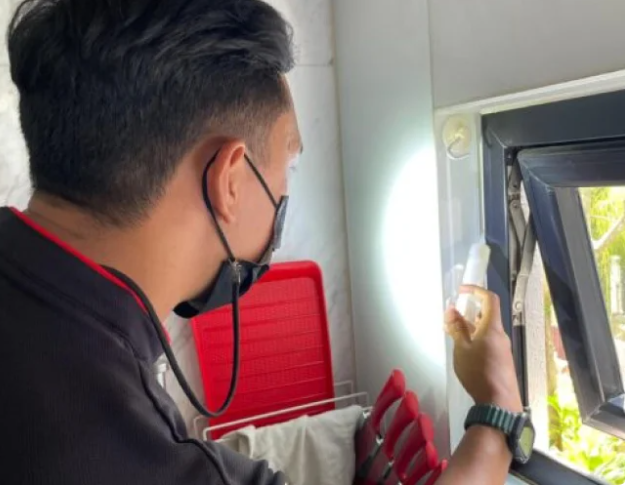
Mosquito-control pricing depends on the property layout and the number of potential breeding and resting areas.
A small balcony requires a narrower inspection than a landed home with gardens, roof gutters, planters, perimeter drains and outdoor structures.
Effective mosquito management begins with identifying and removing stagnant water. Plant-pot plates, containers, roof gutters, drains and outdoor equipment should be checked regularly. Where water cannot be eliminated immediately, an appropriate larval-control method may be considered.
Targeted misting or residual treatment may also be used in shaded areas where adult mosquitoes rest. Fogging can temporarily reduce exposed adult mosquitoes when conditions justify it, but it does not remove eggs or larvae from breeding water.
NEA states that thermal fogging should be conducted only when necessary. A Vector Control Operator must notify NEA electronically at least 24 hours before the operation. When fogging is scheduled for a weekend or public holiday, notification must be submitted two days in advance. People in the immediate vicinity must also be informed before the operation unless an urgent public-health situation requires immediate intervention.
A mosquito-control quotation should explain whether the service includes breeding-source inspection, larval treatment, adult mosquito control and follow-up. Fogging alone should not be presented as a complete solution when breeding sites remain untreated.
One-Time Treatment or Service Contract?
A one-time treatment may be suitable when the infestation is minor, isolated and linked to a source that can be corrected.
Limited ant activity caused by accessible food residue may respond to targeted baiting and improved food storage. A small cockroach problem around one floor trap may also be manageable when the entry route and moisture conditions are addressed.
A service contract becomes more useful when the property faces continuing pest pressure. Cockroaches may enter through shared drains and rubbish systems, ants may nest within wall voids, and rodents can move between adjoining ceiling spaces.
Commercial properties are also more likely to need scheduled pest management. Food handling, deliveries, stored goods, waste disposal and customer traffic create recurring risks even when general hygiene standards are good.
Before accepting a contract, compare the pests covered, treatment areas, service frequency and monitoring arrangements. Confirm whether additional visits are chargeable, whether service reports will be issued and which sanitation, maintenance or proofing responsibilities remain with the customer.
A low monthly fee may offer poor value if the pest affecting the property is excluded or the service consists only of routine spraying.
The recommended frequency should reflect the property’s operating conditions, location and recorded pest activity rather than assigning the same standard package to every customer.
What a Professional Quotation Should Include
A useful quotation should explain what the provider intends to do rather than simply naming a pest and stating a price.
| Quotation item | What the customer should confirm |
| Pest identification | Whether the pest has been confirmed or remains subject to inspection |
| Treatment areas | Which rooms, structures and outdoor areas are included |
| Treatment method | Whether bait, traps, steam, heat, dust, liquid applications or monitoring devices will be used |
| Number of visits | Whether the price covers one appointment or a programme |
| Preparation | What occupants must move, cover, clean or launder beforehand |
| Monitoring | Whether traps, bait stations or termite stations will be checked |
| Follow-up | What qualifies for a return visit and whether retreatment is included |
| Safety instructions | Whether residents or pets must leave and when the area can be occupied again |
| Additional charges | Transport, specialist equipment, device rental, proofing or structural work |
| Exclusions | Untreated rooms, common property, outdoor areas or external reinfestation sources |
Large proofing works, drain repairs, replacement of damaged timber and disposal of contaminated furniture may need to be quoted separately.
Any warranty or service period should define the pest and treatment areas covered, the duration of the arrangement, what qualifies for a return visit and which customer actions may affect the coverage.
Promises of permanent elimination should be treated cautiously. Pests can re-enter through neighbouring units, shared building systems, deliveries and outdoor areas beyond the provider’s control.
A responsible provider should explain these limitations and define the intended outcome instead of making an unlimited guarantee.
Why Inspection Matters Before Pricing
An inspection enables the provider to confirm the pest and determine whether the visible activity is isolated or connected to a wider infestation.
Incorrect identification can waste time and money. Flying ants may be confused with termite swarmers, while unexplained bites alone do not prove the presence of bed bugs.
The inspection should assess likely harbourages, nesting areas, food sources, moisture conditions and entry routes. It should also consider whether the activity extends through ceilings, wall cavities, shared services or outdoor spaces.
Photographs may be sufficient for an initial estimate in a straightforward case. Concealed termites, widespread bed bugs and rodents moving inside ceiling spaces are more likely to require an on-site assessment before the complete scope can be priced.
After the inspection, the provider should explain the evidence found, likely source, recommended method and expected number of appointments.
Singapore’s Vector-Control Requirements
Only companies registered with the National Environment Agency as Vector Control Operators may be engaged to undertake vector-control work in Singapore. Employees carrying out the work must be licensed as Vector Control Technicians or certified as Vector Control Workers.
These terms refer to different parties. The Vector Control Operator is the registered business, while the technician and worker classifications apply to the personnel performing the work.
Consumers should be cautious with broad expressions such as “NEA-approved pest company.” Registration confirms that the operator has met the applicable regulatory requirements. It does not mean that NEA recommends the company or guarantees the quality of every service it delivers.
NEA advises customers to consider the provider’s trained personnel, experience, technology, equipment and track record. It also states that inspection findings and treatment work should be recorded in a service report.
Before booking, customers can ask for the company’s registered business name, check the current NEA registry and confirm that the personnel attending the property hold the relevant licence or certification.
Registered Public-Health Pesticides
Public-health pesticides and repellents intended for use against mosquitoes, flies, cockroaches, rats and rat fleas must be registered with NEA before they can be advertised, sold or supplied in Singapore.
Registered products must carry a registration mark and be labelled either “For General Use” or “For Restricted Use.” General-use products may be used directly by households according to their approved labels.
Restricted-use products should be handled only by licensed Vector Control Technicians or certified Vector Control Workers because they may involve higher toxicity, stronger concentrations, further dilution or specialist application equipment. Such products should not be available to the general public through ordinary consumer markets.
Residents should avoid purchasing restricted professional products through unofficial channels.
A provider should be able to explain what product will be used, where it will be placed and what preparation or re-entry instructions apply.
Descriptions such as “green,” “chemical-free,” “eco-friendly” or “low toxicity” should not replace product-specific information. Customers should still ask about the active treatment, intended use and precautions stated on the label.
Integrated Pest Management and SS 721:2025
Singapore Standard SS 721:2025 is the Code of Practice for the Performance of Pest Management Services.
The standard was developed by a working group co-led by NEA and the Singapore Pest Management Association, with participation from service buyers, educational institutions and other industry stakeholders. It was established under the Singapore Standards Council and is overseen by Enterprise Singapore.
SS 721:2025 promotes integrated pest management instead of relying primarily on repeated chemical application. The approach prioritises prevention, risk assessment and monitoring, followed by appropriate physical, biological or chemical intervention.
In practice, an integrated programme may combine the removal of food, moisture and breeding sources with improved waste handling, structural repairs, traps, monitoring devices and targeted pesticide use. Results should then be reviewed so the plan can be adjusted when necessary.
The standard is separate from Vector Control Operator registration. Registration concerns whether a company may legally carry out regulated work, while SS 721:2025 provides a framework for planning, delivering and assessing pest-management services.
Mosquito-Breeding Responsibilities
Owners and occupiers are responsible for preventing mosquito breeding within their premises.
Common breeding habitats include plant trays, pails, vases, blocked gutters, drains and discarded containers. Even a small amount of stagnant water can become a breeding site.
NEA states that when mosquito breeding is found in a home or other premises, the owner or occupier may face a fine of up to S$5,000, imprisonment for up to three months, or both under the Control of Vectors and Pesticides Act. For residential premises, enforcement may be issued through a Notice to Attend Court, with the owner or occupier informed by mail.
The S$5,000 amount is the maximum penalty stated by NEA rather than an automatic fixed charge applied identically in every case. Enforcement depends on the circumstances and the applicable legal process.
Fogging should not be treated as a substitute for removing breeding sources. It targets exposed adult mosquitoes but does not eliminate stagnant water, eggs or larvae.
When DIY Measures May Be Enough—and When to Call a Professional
DIY pest control may be reasonable for occasional, clearly isolated activity.
Cleaning food residue, storing food in sealed containers, repairing leaks, clearing stagnant water and closing simple entry gaps can reduce pest pressure. Consumer traps and bait products may also help when the pest has been identified correctly and the products are used strictly according to their labels.
The limitation is that household treatment usually reaches only the visible part of an infestation. Colonies, nests, eggs and concealed entry routes may remain.
Professional help is advisable when pests continue returning despite cleaning and correctly used household products. Frequent daytime cockroach sightings, egg cases in several areas, rodent droppings, scratching inside ceilings, termite mud tubes, unexplained timber damage and confirmed bed bug evidence are strong reasons to arrange an inspection.
Professional treatment is also appropriate when activity has spread across several rooms, the pest cannot be identified confidently or repeated DIY attempts have failed.
Businesses should respond promptly when pests appear in kitchens, food-storage rooms, production zones or customer-facing areas. Delaying treatment can allow the source to become more difficult and disruptive to manage.
Safety Around Children, Pets and Sensitive Occupants
Pest control can be carried out responsibly when the method is selected carefully and products are applied according to their approved labels.
Residents should tell the provider about young children, elderly household members, pregnancy, allergies, respiratory sensitivities, birds, reptiles, aquariums and other pets before treatment begins.
Some treatments are contained within bait stations or placed inside inaccessible cracks and may cause little disruption. Other applications require people and animals to leave the treated area temporarily.
Food, utensils, toys, pet bowls and bedding may need to be removed or covered. Aquariums can require additional precautions because some pesticide products may be harmful to aquatic life.
Customers should ask what will be applied, where it will be placed, how long the area must remain vacant and when normal cleaning can resume.
The provider should give clear preparation and re-entry instructions rather than relying on vague descriptions of a treatment as safe, natural or environmentally friendly.
Pest Risks by Property Type
Pest risks and likely sources differ according to the property.
In HDB flats, cockroaches and rodents may move through rubbish systems, drains, service ducts and pipe openings. Ants can enter from corridors, planter areas, adjoining units or gaps around built-in fittings.
When the suspected source is outside the flat, the resident may need to contact the town council or relevant managing authority. Repeatedly treating one unit may have limited effect if the infestation is established in a common refuse or service area.
Condominiums face similar shared-building risks. Refuse rooms, basement car parks, landscaped areas, drains and service risers may support pest activity.
Recurring problems connected to common property should be reported to the management corporation or managing agent. Contractor registration, loading-bay access and service-lift arrangements may also need to be completed before treatment.
Landed homes generally require a wider inspection. Gardens, roof spaces, outdoor kitchens, storage areas, gutters, drains and soil contact increase exposure to mosquitoes, rodents, ants and termites.
Treatment may need to cover the building perimeter and outdoor structures rather than only the rooms where pests were observed.
Commercial and industrial pest-management programmes should reflect how the premises operate. Food handling, stock movement, deliveries, waste disposal and customer traffic all affect pest pressure.
Factories and warehouses may require monitoring across loading bays, perimeter areas, storage racks, drains and production zones. Written service records allow management to track activity and confirm whether recommended corrective work has been completed.
Preventing Pests From Returning
Treatment is more effective when the conditions supporting the infestation are corrected.
Food should be stored in sealed containers, and kitchen surfaces should be cleaned after use. Grease and food residue around appliances and inside cabinets should not be overlooked.
Rubbish should be tied securely and removed regularly. Food waste should not be left exposed overnight.
Leaks beneath sinks, beside appliances and around pipes should be repaired. Drains and floor traps also require appropriate maintenance, particularly in areas that are used infrequently.
Clutter in storerooms, service yards and beneath furniture creates hiding places and makes inspection more difficult. Gaps around doors, windows, pipes and air-conditioning openings should be repaired where practical.
Outdoor containers and plant trays should be checked after rain. Roof gutters and drains should remain clear so water does not accumulate.
These measures cannot remove an established infestation on their own, but they can improve treatment results and reduce the risk of reinfestation.
Choosing a Pest-Control Provider in Singapore
Begin by confirming that regulated vector-control services will be performed by a registered Vector Control Operator using appropriately licensed or certified personnel.
Compare the proposed treatment rather than only the headline price. A reliable provider should be able to explain the pest identified, likely source, areas covered, products or devices used, number of visits and limitations of the programme.
Relevant experience with the property type can also matter. Cockroaches linked to an HDB refuse system require a different response from termites in a landed home or rodents nesting above a warehouse ceiling.
Aardwolf Pestkare is one example of a Singapore provider that publishes indicative residential pricing before issuing a property-specific quotation. As with any operator, customers should independently verify its current registration, attending personnel, treatment scope, pricing and follow-up conditions before booking.
A clear quotation, realistic explanation and evidence-based treatment plan are more meaningful indicators of professionalism than broad claims about being the cheapest, safest or most effective company.
Frequently Asked Questions
Can a pest-control company provide an exact price over the phone?
A starting estimate may be possible when the pest, property type and affected area are straightforward. Concealed termites, widespread bed bugs and rodent activity inside ceilings usually require an inspection before the final scope can be priced.
What is usually the cheapest pest-control treatment?
Light ant and cockroach treatments are commonly among the more affordable residential services. One published HDB reference begins at about S$140, although the final price depends on the property, infestation and provider.
Are follow-up visits normally included?
Not always. Some packages include scheduled follow-up, while others charge separately for return appointments. The number and timing of visits should be confirmed before treatment begins.
Can one pest-control visit solve the problem?
One appointment may be sufficient for a small, isolated infestation. Pests with concealed eggs, colonies, nesting areas or continuing access routes may require further monitoring or treatment.
Can pests return after professional treatment?
Yes. Pests may re-enter through drains, neighbouring units, rubbish systems, gardens, deliveries and structural openings. Treatment should be supported by sanitation, moisture management and proofing.
Is mosquito fogging enough on its own?
No. Fogging may temporarily reduce exposed adult mosquitoes, but it does not remove breeding water, eggs or larvae. Source removal and larval management remain necessary.
How can a provider’s registration be checked?
Customers can consult NEA’s current register of Vector Control Operators and ask whether the personnel attending the property are licensed Vector Control Technicians or certified Vector Control Workers.
Making an Informed Choice
Pest control in Singapore depend on the pest, property layout, infestation severity, accessibility, treatment method and number of visits required.
Published prices can help with early budgeting, but they should not be mistaken for official market averages. A worthwhile quotation should explain what will be inspected, which areas will be treated, how many visits are included and what happens if pest activity continues.
For homeowners who prefer a professional assessment, Aardwolf Pestkare provides residential pest-management services in Singapore and publishes indicative prices for several common programmes. Homeowners should still confirm the current treatment scope, safety instructions, regulatory status and follow-up arrangements before proceeding.
The best-value service is not necessarily the cheapest appointment. It is the treatment plan that addresses the source of the infestation, manages immediate activity responsibly and reduces the likelihood that the same problem will return.


 By
By