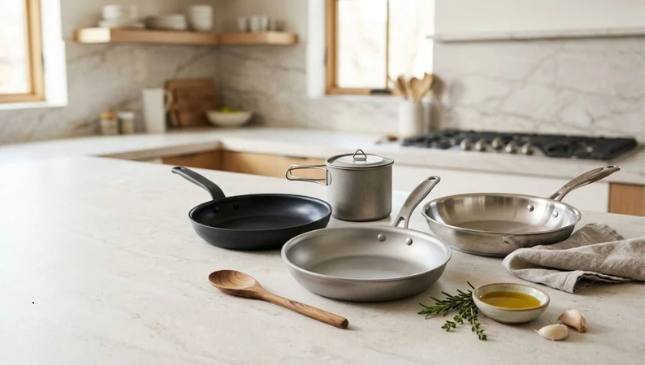

Choosing the right cookware can make a noticeable difference in your everyday cooking experience. Titanium pots and pans have become popular among home cooks because they are known for their strength, lightweight feel, and modern appeal. However, not every titanium cookware set is made the same. Understanding what to look for can help you choose cookware that suits your kitchen, cooking habits, and budget.
Understand What Titanium Cookware Means
The first step is understanding how titanium is used in cookware. Some products are made primarily from titanium, while others combine titanium with materials such as stainless steel or aluminum. There are also pans that use a titanium-based coating rather than solid titanium construction.
These differences affect how the cookware heats, how durable it is, and how it should be maintained. Before buying, read the product description carefully and check the manufacturer’s specifications rather than relying on the word “titanium” alone.
Knowing what you’re actually purchasing makes it easier to compare different options.
See also: Whole Life vs. Term Life Insurance: Which Is Right for You in Hong Kong?
Consider the Construction
Cookware construction plays a major role in performance. A well-designed pot or pan should feel sturdy without being unnecessarily heavy.
Look for cookware with solid construction and a stable base. A quality base can help distribute heat more evenly and reduce the likelihood of hot spots during cooking.
For pans with multiple layers, check what materials are used in each layer. Combining different metals can provide benefits such as improved heat distribution while maintaining the strength associated with titanium.
Choose the Right Size
Size is another important factor. The best cookware set isn’t necessarily the largest one available; it is the one that matches the way you normally cook.
A small frying pan can be useful for eggs, sauces, and individual portions. A medium-sized pan is more versatile for everyday meals, while a larger skillet is useful when cooking for several people.
For pots, consider what you prepare most often. A smaller saucepan works well for sauces and grains, while a larger stockpot is better for soups, pasta, and family-sized meals.
Buying sizes you will actually use can prevent your cabinets from becoming crowded with cookware that rarely leaves the shelf.
Check Heat Distribution and Control
Good heat distribution is essential for consistent cooking. A pan that heats unevenly can leave some food undercooked while other areas become overdone.
When comparing titanium cookware, pay attention to the base and overall construction. Some designs incorporate highly conductive materials to improve heat distribution.
Your cooking style matters as well. If you frequently sear meat, sauté vegetables, or prepare delicate foods, responsive temperature control can be especially important.
Think About Your Cooktop
Before purchasing a cookware set, make sure it works with your stove.
Gas, electric, ceramic, and induction cooktops can have different compatibility requirements. Induction cooking, in particular, requires cookware with suitable magnetic properties.
Do not assume that every titanium pot or pan will work on every type of cooktop. Check the manufacturer’s compatibility information before making a purchase.
This simple step can save you from an expensive and inconvenient mistake.
Look at the Handles
Handles are easy to overlook, but they have a major impact on usability. A good handle should feel secure and comfortable in your hand.
Look for sturdy attachment points and a shape that provides a reliable grip. If you regularly move cookware from the stovetop to the oven, check whether the handles are oven-safe and what temperature limits apply.
Some cookware also has removable or detachable handles, which can make storage easier. Consider whether that feature would actually be useful for your kitchen.
Decide Whether You Need Nonstick Features
Titanium cookware can come in different surface designs. Some products have a nonstick coating, while others have an uncoated cooking surface.
A nonstick surface may be convenient for foods such as eggs, pancakes, and fish. It can also make cleaning easier. However, coated cookware requires proper care to protect the surface.
If you prefer using metal utensils or want a pan without a synthetic coating, an uncoated option may be more appropriate. The best choice depends on your cooking preferences and the manufacturer’s recommendations.
Consider Maintenance Requirements
Every cookware material has specific care requirements. Before buying, find out how the pots and pans should be cleaned and stored.
Some products may be dishwasher-safe, while others are better cleaned by hand. You should also check which utensils are recommended and whether high heat should be avoided.
Following the manufacturer’s care instructions can help preserve the cookware’s appearance and performance.
Easy maintenance is particularly valuable if you cook frequently.
Pay Attention to Weight
One of titanium’s appealing characteristics is its strength-to-weight ratio. However, cookware weight can still vary depending on its construction.
A pan should be heavy enough to sit securely on the cooktop but comfortable enough to lift when full. If you have difficulty handling heavy cookware, lightweight titanium options may be especially appealing.
Try to think about how the cookware will feel after it has been filled with food. A comfortable design makes everyday cooking much easier.
Check Quality and Warranty
Price should not be the only factor when selecting titanium cookware. Extremely inexpensive products may not provide the construction or durability you expect.
Look at customer feedback, manufacturer information, product specifications, and warranty coverage. A company that provides clear details about materials, construction, and care is generally easier to evaluate.
A reasonable warranty can also provide additional confidence, particularly when purchasing a higher-priced cookware set.
Choose Pieces Based on Your Cooking Habits
A complete cookware set may look appealing, but you don’t necessarily need every piece included in a large collection.
Think about the meals you prepare most often. If you frequently make stir-fries and one-pan dinners, a versatile skillet may be more valuable than several specialized pans. If you enjoy soups and slow-cooked meals, investing in a quality pot may make more sense.
Choose cookware that fits your lifestyle rather than simply buying the biggest set.
Balance Quality, Performance, and Price
The best titanium pots and pans should provide a sensible balance between quality and cost. A higher price does not automatically guarantee better performance, but quality construction often comes with a higher initial investment.
Consider the cookware as a long-term kitchen purchase. A well-made pan that performs reliably for years can offer better value than repeatedly replacing inexpensive cookware.
Take time to compare materials, sizes, features, compatibility, and warranties before making your final decision.
Conclusion
Choosing the best titanium pots and pans for your home starts with understanding what you need from your cookware. Consider the construction, size, heat distribution, cooktop compatibility, handles, surface, maintenance, and overall quality before buying.
Titanium cookware can be an excellent option for people looking for durable and lightweight kitchen equipment, but the specific design matters. By focusing on genuine product specifications rather than marketing claims, you can find cookware that fits your cooking style and provides dependable everyday performance.


 By
By