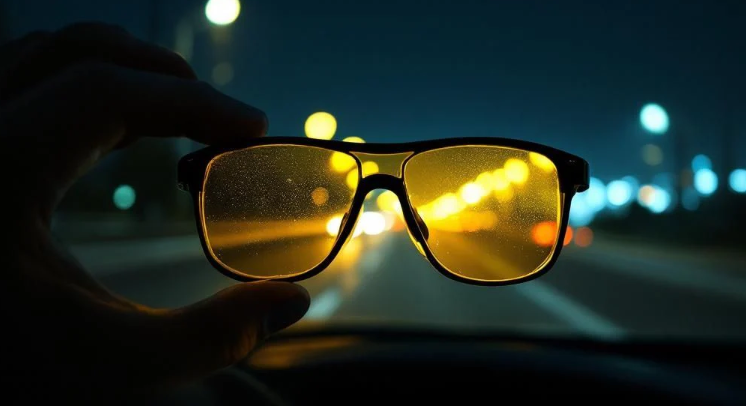

Navigating dark roads after sunset presents a unique set of visual challenges. Clear roadways can suddenly feel chaotic when oncoming traffic approaches. Bright LED headlights, high beams, and roadside billboards create harsh reflections that temporarily blind drivers.
If night driving causes you to squint, strain, or experience dull headaches, finding a reliable solution is essential. Eyewear options like anti-glare coatings and yellow-tinted lenses promise to eliminate blinding light and make dark roads safer.
However, not all night driving solutions perform equally well in total darkness. Understanding how different lens technologies handle low-light environments helps you pick eyewear that actually improves your safety.
1. The Science of Night Glare and Eye Strain
Why does light feel so much harsher on your eyes after dark? The answer comes down to natural eye biology and optical physics.
When ambient light drops, your pupils dilate automatically to gather as much available light as possible. While this helps you see in the dark, larger pupils also make your eyes far more sensitive to sudden flashes of bright light.
When high-intensity LED or xenon headlights hit your windshield, light rays scatter across your eye’s lens. This scattering creates several irritating visual phenomena:
- Starbursts: Intense rays of light that radiate outward from headlights.
- Halos: Bright rings surrounding streetlamps and overhead signs.
- Visual Blackouts: Brief moments of vision loss after a vehicle with high beams passes by.
- Physical Strain: Constant muscle tension around your eyes from persistent squinting.
Wet pavement during rainstorms worsens glare significantly. Water acts like a mirror on asphalt, doubling reflections and hiding white lane markings.
See also: Whole Life vs. Term Life Insurance: Which Is Right for You in Hong Kong?
2. How Anti-Glare Lenses Perform in the Dark
An anti-reflective (AR) coating—often called an anti-glare coating—is a microscopic, multi-layer treatment applied directly to the surface of clear lenses.
Standard uncoated glass or plastic lenses reflect up to 8 to 12 percent of light away from your eyes. At night, those internal reflections bounce around inside your glasses, creating ghost images and halo rings around light sources.
Anti-reflective coatings eliminate surface bounces completely. They allow up to 99 percent of available light to pass straight through your lenses and into your pupils.
Here is how anti-glare treatments improve night driving safety:
- They stop internal lens reflections that create distracting ghost images.
- They maximize light transmission so dark road hazards stay clearly visible.
- They reduce eye fatigue during long evening commutes.
- They keep your lenses looking completely clear to observers.
If glare makes your evening commute stressful, picking up dedicated anti-glare driving glasses gives you clear optics treated specifically to suppress reflection without reducing vital ambient light.
3. The Truth About Yellow-Tinted Lenses at Night
Yellow-tinted glasses are widely advertised as ultimate night driving aids. While yellow lenses feel brighter at first glance, understanding their limitations is critical for road safety.
Yellow lenses work by filtering out high-energy blue light waves. By blocking blue tones, yellow lenses boost visual contrast on foggy, overcast, or hazy afternoons. They make objects stand out sharply against grey backgrounds during twilight hours.
However, all tinted lenses inherently reduce the total amount of light reaching your eyes. In pitch-black conditions, cutting down incoming light poses real risks.
Here is a quick comparison of lens types for night driving:
- Clear Lenses with AR Coating: The safest choice for total darkness. They allow maximum light transmission while suppressing internal reflections.
- Light Yellow Tinted Lenses: Great for twilight, fog, or heavy rain, but best used with caution on dark, unlit rural roads.
- Dark Polarized Sunglasses: Never wear dark sunglasses at night. They block far too much light and conceal unlit road hazards, pedestrians, and cyclists.
If you already use readers for close-up tasks like viewing dashboards or GPS maps, choosing modern reading glasses for men equipped with premium anti-reflective coatings ensures sharp dashboard focus without sacrificing nighttime road clarity.
4. Simple Habits for Sharper Evening Vision
Upgrading your eyewear is a huge step, but combining good glasses with proper vehicle maintenance creates the safest driving environment possible.
First, keep your eyeglass lenses completely clean. Oily smudges, dust, and fingerprints scatter light rays instantly, turning tiny light sources into large glare patches. Use a dedicated lens cleaner and microfiber cloth daily.
Second, clean the inside and outside of your vehicle’s windshield. A hazy film of dust and grime builds up on the inside of car glass over time, intensifying headlight glare.
Third, adjust your mirrors correctly. Angle your side mirrors slightly outward so oncoming headlights do not shine directly into your eyes from behind.
Finally, avoid looking directly into the headlights of oncoming cars. Shift your gaze slightly down and toward the white line on the right edge of your lane until the vehicle passes.
Frequently Asked Questions
Do anti-glare coatings actually reduce headlight glare at night?
Yes, anti-glare (anti-reflective) coatings prevent light from reflecting off the front and back of your lenses, eliminating internal halos, starbursts, and ghost images around bright lights.
Are yellow night driving glasses safe for pitch-black roads?
Yellow lenses boost contrast in twilight or fog, but they also reduce the total amount of light entering your eyes. For unlit rural roads, clear lenses with an anti-reflective coating are much safer.
Can I get anti-glare coating added to my prescription glasses?
Yes, anti-reflective coatings can be applied to almost any prescription lens type, including single-vision, bifocal, and progressive reading lenses.
Why do modern car headlights produce more glare than older ones?
Modern cars frequently use LED and xenon lights, which produce higher lumen output and cooler blue light wavelengths. These brighter lights trigger stronger visual contrast and glare for oncoming drivers.
How do I clean anti-glare glasses without damaging the coating?
Rinse your lenses with lukewarm water, apply a drop of mild dish soap or dedicated lens spray, and gently wipe dry with a clean microfiber cloth. Avoid harsh chemicals or paper towels.
Conclusion
Navigating dark roads safely requires sharp vision and minimal visual distraction. Understanding how different lens technologies perform helps you choose eyewear that genuinely protects your eyes after dark.
While yellow lenses offer contrast benefits in foggy or twilight conditions, clear lenses equipped with a high-grade anti-reflective coating remain the gold standard for dark night driving. They eliminate blinding reflections while letting maximum light reach your eyes.
Take control of your evening driving comfort today. Invest in quality glare-reducing eyewear and enjoy clear, confident vision on every late-night trip.


 By
By