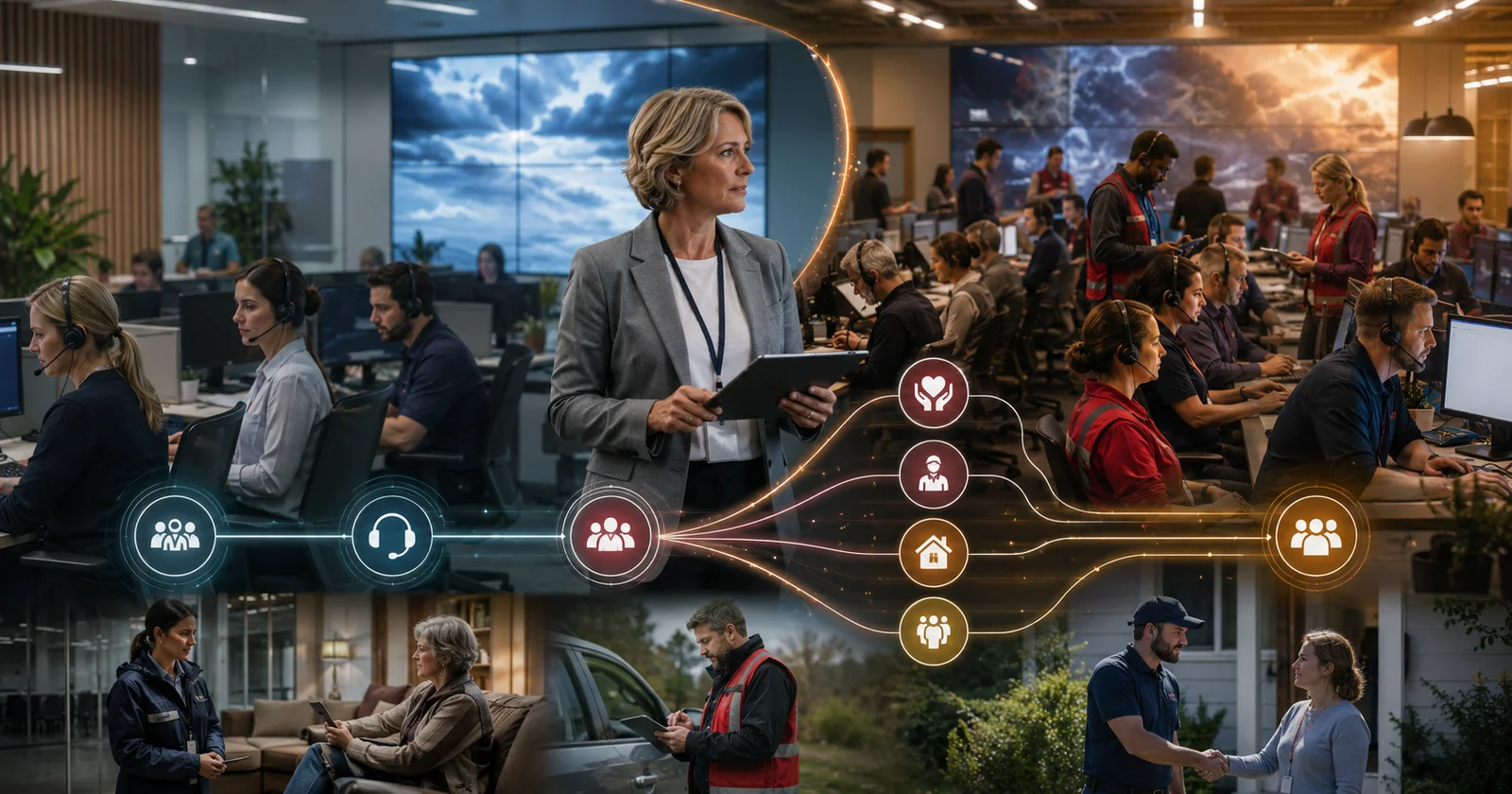

When a major natural disaster affects Australian communities, the insurance industry may face a sudden increase in claims, enquiries, complaints, and requests for emergency assistance. In Australia, a catastrophe declaration can trigger a coordinated response designed to help insurers manage the operational impact while supporting affected customers.
For insurance providers, the declaration is not simply a label for a severe event. It can require customer service teams, claims departments, assessors, repair networks, and operational leaders to rapidly adjust their approach.
A structured insurance catastrophe customer support in Australia model can help insurers scale their response while maintaining clear communication, efficient claims handling, and appropriate customer care.
What Is a Catastrophe Declaration?
A catastrophe declaration is generally used for significant events that cause widespread damage and create substantial pressure on insurance and community resources.
Events may include:
- Bushfires
- Floods
- Cyclones
- Severe storms
- Hailstorms
- Other major natural disasters
In Australia, the Insurance Council of Australia can declare an insurance catastrophe for major events. Such declarations can activate coordinated industry arrangements and help focus resources on affected communities.
The declaration does not automatically mean every claim is covered. Coverage continues to depend on the customer’s individual policy and circumstances.
Why Customer Support Changes After a Declaration
Once a catastrophe is declared, insurers can experience a sharp increase in customer contacts.
Customers may need information about:
- How to lodge a claim
- Emergency repairs
- Temporary accommodation
- Property or vehicle damage
- Claim status
- Assessment timeframes
- Documentation
- Safety considerations
- Available support
This creates additional pressure on contact centres and claims teams.
A well-designed catastrophe declaration response helps insurers move from normal operating procedures toward a more flexible disaster-response model.
Activate Disaster Claims Operations
One of the first priorities is increasing operational capacity.
Effective disaster claims operations can involve:
- Dedicated catastrophe teams
- Additional claims representatives
- Flexible workforce arrangements
- Specialist assessors
- Digital claims channels
- Expanded repair networks
- Escalation procedures
- Additional customer support capacity
The objective is to increase capacity without sacrificing accuracy or customer experience.
Insurers can use historical event data to estimate potential claim volumes and determine where additional resources should be deployed.
Make Claims Lodgement Easier
Customers affected by a catastrophe may already be dealing with displacement, damaged property, or disrupted services.
The claims process should therefore be as simple as possible.
Digital platforms can allow customers to:
- Lodge claims
- Upload photographs
- Submit documents
- Provide incident information
- Track claim progress
- Receive updates
Clear online guidance can also reduce unnecessary calls about basic claims requirements.
However, customers who cannot use digital channels should continue to have appropriate access to human support.
Prioritize Urgent Customer Needs
Not every catastrophe-related enquiry has the same urgency.
A customer whose home is unsafe or who requires emergency assistance may need faster intervention than a customer asking about a routine claim-status update.
Effective triage can help insurers prioritize cases involving:
- Unsafe properties
- Emergency accommodation
- Significant damage
- Essential service disruption
- Urgent vehicle requirements
- Customers requiring additional assistance
AI can help classify incoming enquiries and route them to the appropriate teams, while human professionals remain responsible for complex decisions and sensitive situations.
Strengthen Catastrophe Customer Service
During a major event, customers need more than a claims number. They need clear information about what happens next.
Strong catastrophe customer service should focus on:
- Empathy
- Clear communication
- Simple explanations
- Proactive updates
- Appropriate escalation
- Consistent information
Customer service agents should have access to approved disaster-response guidance so they can provide consistent answers across channels.
This can be especially important when policies, processes, repair arrangements, or assessment timelines are changing because of the scale of the event.
Communicate Proactively
A lack of information can lead to repeated customer contacts.
Customers may call multiple times to ask whether their claim has been received, whether an assessor has been assigned, or when repairs are expected to begin.
Insurers can reduce uncertainty through proactive updates using:
- SMS
- Customer portals
- Mobile applications
- Digital messaging
- Phone support
Automated notifications can handle routine updates, while human representatives can support customers with more complex circumstances.
Use AI to Manage High Enquiry Volumes
AI can provide valuable support during catastrophe events when customer contact volumes rise rapidly.
Potential applications include:
- Customer enquiry classification
- Claims triage
- Knowledge retrieval
- Interaction summarization
- Document processing
- Automated status updates
- Case routing
For example, AI can identify whether an incoming enquiry relates to a new claim, an existing claim, emergency assistance, accommodation, or a general policy question.
This allows insurers to direct enquiries more efficiently.
However, AI should complement rather than replace human support, particularly for vulnerable customers and complex claims.
Give Agents a Complete Customer View
Agents need access to relevant customer information to provide effective support.
An integrated environment can bring together authorized information such as:
- Policy details
- Claim status
- Previous interactions
- Submitted documents
- Assessment information
- Repair arrangements
- Customer communication preferences
This reduces the need for customers to repeatedly explain the same situation.
Better access to customer context can also reduce handling times and improve consistency across different service channels.
Scale the Insurance Event Response
A major catastrophe can affect multiple parts of an insurer’s operating model at once.
A successful insurance event response may require coordination between:
- Customer service
- Claims teams
- Assessors
- Repairers
- Towing providers
- Accommodation providers
- Technology teams
- Operational leadership
Organizations such as TP Australia can support insurers by combining human-led customer experience capabilities with technology-enabled support and scalable operational resources during periods of high customer demand.
Monitor Performance During the Event
Insurers should continuously monitor their operational performance after a catastrophe declaration.
Useful metrics include:
- New claims
- Customer enquiry volumes
- Claims backlog
- Average response time
- Claims processing time
- Escalations
- Repeat contacts
- First-contact resolution
- Customer satisfaction
Real-time data can help insurers identify where additional resources are required.
For example, if claims-related enquiries increase significantly in one region, additional representatives or specialist teams can be deployed.
What Happens After the Immediate Crisis?
The response does not end when enquiry volumes begin to decline.
Insurers should review the event to understand what worked and what needs improvement.
Post-event analysis can examine:
- Claims processing times
- Customer complaints
- Common enquiries
- Communication effectiveness
- Staffing requirements
- Digital service performance
- Repairer capacity
- Escalation patterns
These insights can improve future catastrophe planning.
Building a Resilient Catastrophe Support Model
A catastrophe declaration can fundamentally change the demands placed on insurance customer service teams.
A strong insurance catastrophe customer support in Australia strategy combines scalable staffing, digital claims capabilities, AI-assisted workflows, proactive communication, intelligent triage, and human-led support.
By strengthening the catastrophe declaration response, improving disaster claims operations, and developing effective catastrophe customer service, insurers can respond more effectively when communities experience major disasters.
The ultimate objective is not simply to process more claims. It is to provide customers with timely information, appropriate assistance, and a clear path forward during one of the most challenging periods they may experience.
Frequently Asked Questions
1. What happens when an insurance catastrophe is declared?
A catastrophe declaration can trigger additional industry coordination and operational measures. Insurers may increase claims and customer service capacity, activate specialist teams, and provide additional support to affected customers.
2. What is insurance catastrophe customer support in Australia?
Insurance catastrophe customer support in Australia refers to the customer service, claims, technology, and operational resources used to support policyholders during major declared catastrophe events.
3. What is a catastrophe declaration response?
A catastrophe declaration response is the coordinated approach insurers use to manage increased claims, customer enquiries, assessments, repairs, and support requirements following a major event.
4. What are disaster claims operations?
Disaster claims operations are the processes and resources used to handle unusually high claims volumes following events such as floods, bushfires, cyclones, and severe storms.
5. How can AI support catastrophe customer service?
AI can help classify enquiries, assist with claims triage, retrieve relevant information, summarize customer interactions, automate routine updates, and route cases to appropriate teams.
6. What is an insurance event response?
An insurance event response is the broader operational strategy used by an insurer to manage customer service, claims, assessments, repairs, communications, and resources during a major disaster.


 By
By