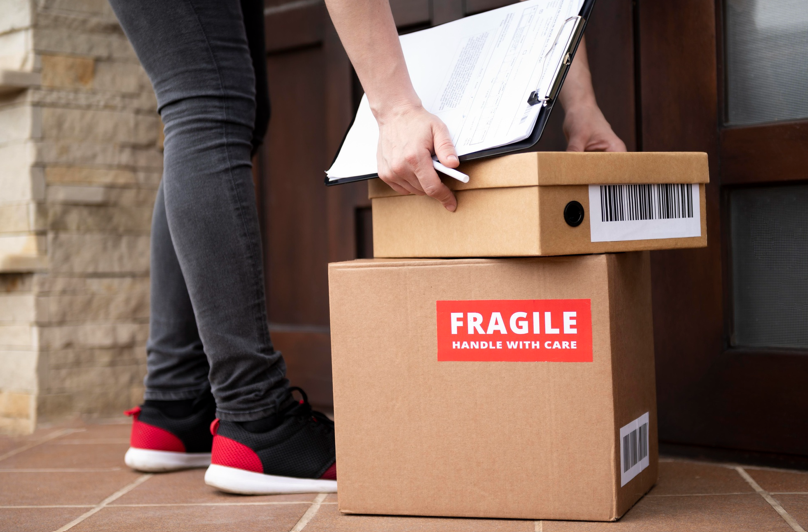

To pack fragile items for a move, you need to create a shock-absorbing buffer using high-quality materials like honeycomb wrap or bubble wrap roll. Ensure individual wrapping of products, fill gaps with adequate cushioning, and place these items on heavier items. Label the boxes clearly, securing careful handling.
Key Takeaways
- Assess fragility levels before packing and choose cushioning based on risk.
- Use quality flap boxes, bubble wrap, and honeycomb wrap to absorb shocks, prevent movement, and protect items from moisture, dust, and transit pressure.
- Pack strategically by lining box bases, placing heavy items at the bottom, filling voids, sealing securely, and performing a shake test before transit.
- Adapt your packing for moving conditions by adding moisture-resistant wrapping during rain, or double-boxing delicate items and increasing cushioning for long-distance moves.
Packing fragile items often becomes an issue, especially during inter-city moving. Since these items are prone to damage, any type of manhandling or bumping often affects them. So, how can you pack your fragile items? What should you consider before you load fragile items? Here’s our guidance, exclusively for fragile items and their safety.
Fragility Assessment
So, before you start packing fragile products, a brief assessment is essential to keep products safe and intact during transit. Check the table below to know how you should categorize fragile items into 3 distinct tiers.
| Risk Level | Fragile Items |
| High | GlasswareCeramicsScreens |
| Medium | FramesSmall AppliancesLamps |
| Lower | Sealed ElectronicsHard plastic. |
Table: Risk Levels of Different Fragile Items
Note: While heavier items require sturdy, double-walled, or 5-ply corrugated box support, for fragile products, you should opt for cushion-first packing. Put the cushion-wrapped items on top of heavier items and fill the gaps and top layers with crumpled packing paper or air pillows.
The Box: First Line of Defense
So, why is the box considered a first line of defense? Why is the quality of a box significant during packing and moving? Here are the 3 top reasons:
- Corrugated boxes, featuring fluted layers, absorb shock during moving and keep items safe from transit pressure.
- While a weak box easily collapses, a corrugated one works as an immediate barrier for items to remain safe and sound from moisture and dust.
- The square edges of a box help create a stable formation in the truck, preventing fragile items from collapsing under their own weight.
Flap Box
Moving with fragile household items? Choose study flap boxes, offering a secure structure, preventing any accidental opening during transit. These boxes are more convenient for long-distance moving, such as Mumbai to Bengaluru or Delhi to Hyderabad.
- Opt for double-walled corrugated boxes for heavy, fragile items, such as appliances and TVs, while standard flap boxes are ideal for house decor, crockery, and glassware.
- Make sure the box allows approx. 2 inches of cushioning on all sides.
Individual Wrapping of Each Fragile Item
So, while wrapping fragile items, don’t forget to wrap individual items before you put them into boxes. It helps items stay intact by protecting them from jarring.
Bubble Wrap Roll
A bubble wrap roll is a reliable cushioning material for irregularly shaped fragile items, such as small appliances, glasses, and figurines. This is a lightweight, flexible material, preventing or reducing damage during transport and handling. Moreover, it also protects fragile goods from dirt and moisture.
It is best for:
- Retail Packaging
- Pharmaceutical Packaging
- E-commerce
- Textiles
- Glassware and Ceramics
Tips: Use multiple layers of bubble wrap rolls for larger or heavier items. For delicate china bone products, use small-bubble rolls, while large-bubble rolls are ideal for fragile appliances.
Honeycomb Wrap
A premium, ideal alternative to plastic bubble wrap, honeycomb wrap fills up the void spaces in packaging boxes.
So, what is the USP of this packaging material?
- 100% recyclable and biodegradable, ensuring it is an eco-friendly packaging.
- Top-level cushioning around products.
Here’s a list of fragile products you can pack with honeycomb wrap.
- Artwork
- Bone China plates and bowls
- Cosmetics
- Ceramic items
- Wine boxes
Pack the Box Correctly
Here’s a guide on packing your box with fragile items.
Step 1: Line the Base
Use 2-3 inches of bubble wrap roll or corrugated sheet at the bottom of the box.
Step 2: Put Heavy Items First
Reduce internal pressure by putting heavier items at the bottom and putting the lighter items on top.
Step 3: Fill the Gap
Fill the void spaces of a flap box with honeycomb wrap, corrugated rolls, or scrunched packing paper to prevent movement inside the box while traveling.
Step 4: Shake Test
Before you seal the box, shake it gently. It will help you understand whether anything shifts inside the box. If it does, add more cushioning.
Step 5: Seal
Seal the box firmly to prevent product damage. In this regard, use BOPP tapes for the best security.
Packing for Indian Moving Conditions
The moving conditions in India vary due to several factors, such as weather and road conditions. Check our guidance on carrying fragile items safely.
Monsoon Moves
Moving during monsoon? Use a layer of moisture-resistant wrap or stretch film over boxes before you load them in a vehicle. It prevents humidity damage to wooden frames or electronics.
Long -Distance/Inter-City Moves
If you’re planning for an inter-city move, use a double-box for extremely fragile items like large glass panels and mirrors.
Auto/Tempo Loading
Smaller commercial vehicles often feature a stiffer and less convenient suspension system, due to which they are highly susceptible to bumps. So, instead of trucks, if you are travelling via tempo or auto, increase the cushioning layer thickness by 50%
Label and Load
Effective labeling and loading ensure better handling of boxes while loading and unloading. Here are our suggestions on labeling and loading your boxes.
- Put stickers “FRAGILE” and “THIS SIDE UP” on all 4 sides, instead of only one side.
- Make the fragile boxes more visible with different colored tapes or markers.
- Do not load fragile boxes underneath heavy items. Load fragile items-filled flap boxes after heavy items.
Wrapping Up
Packing fragile items demands extra attention and care. Along with double-layered corrugated flap boxes, use bubble wrap rolls and honeycombs for product safety. Keep the fragile items on the heavier loads, and seal the boxes correctly. If you’re traveling during the monsoon, use a moisture-resistant wrap.
Pack Your Fragile Items with the Best-Quality Wrapping and Cushioning
Look for packaging brands offering premium-quality flap boxes, bubble wrap rolls, honeycomb wrap, and BOPP tapes. Contact a reliable supplier for the best guidance on packing fragile products and get the right quality of packing items.


 By
By