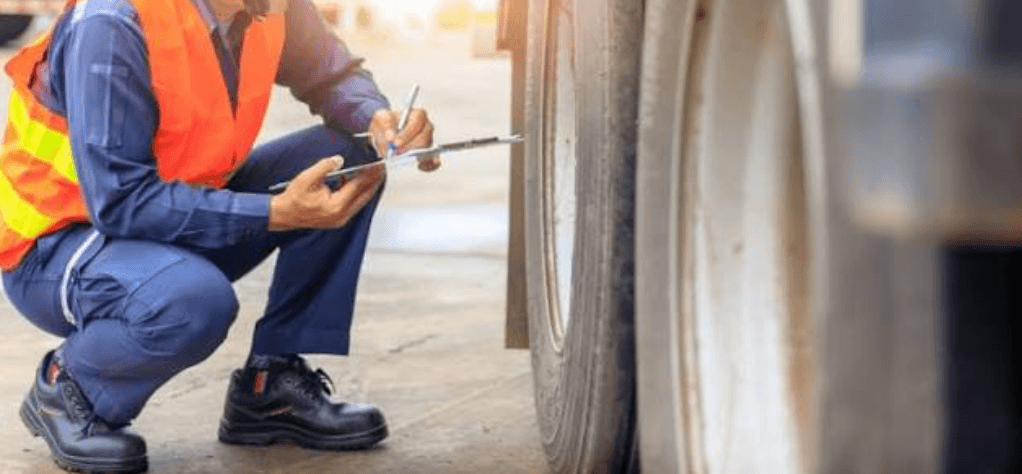

A DOT inspection stops being an abstraction the first time one puts your truck out of service. Until then, it’s a compliance requirement — something you prepare for, pass, and move past. After an out-of-service order, it becomes something else: a concrete demonstration that the inspection process is looking for failures that are genuinely present in the fleet, and that deferring maintenance on the assumption that inspections won’t catch it is a strategy with a defined expiration date.
The Federal Motor Carrier Safety Administration’s inspection data is public and worth understanding. Brake violations account for the largest share of out-of-service orders, followed by tire defects, lighting failures, and steering and suspension issues. None of those are surprise failures — they develop over time, they produce observable symptoms before they become inspection violations, and they’re all addressable through consistent preventive maintenance. The trucks that fail inspections have almost always been showing signs of the underlying problem for weeks or months before the inspector finds it.
What Inspectors Are Actually Looking For
Level I inspections — the most thorough type, covering both the vehicle and the driver’s documents — run through a standard checklist that experienced commercial operators know well. Brake adjustment is measured against specific stroke limits; brakes that are technically functional but out of adjustment will generate violations. Tire tread depth has defined minimums that vary by axle position. Lighting systems are checked for function, not just presence. The coupling systems — fifth wheel, kingpin, safety chains — are inspected for wear and security.
The inspection is systematic rather than adversarial. An inspector working through a Level I check is following a process, not looking for a reason to write violations. Trucks that are maintained consistently pass without drama. The out-of-service orders go to trucks where deferred maintenance has reached the point where the problem is visible to someone running a standardized check. Understanding this inverts the mental model some operators have of inspections as a luck-based encounter rather than a reflection of the fleet’s actual condition.
Heavy Duty Towing: When Inspection Failures Lead to Roadside Calls
Out-of-service orders issued during roadside inspections don’t come with a grace period. The truck stops where it is until the violation is corrected and documented. For operators in the Hudson Valley and tri-state region, that means calling for heavy duty towing to move the vehicle to a shop capable of making the repair — which needs to be a shop that understands the inspection process well enough to document the correction in a way that satisfies reinspection requirements. A repair that fixes the mechanical problem but isn’t documented correctly doesn’t clear the out-of-service order.
NYS Heavy Repair handles both the towing and the repair end of inspection-related out-of-service orders. Their operators are familiar with the documentation requirements that follow an inspection violation, and the shop can prioritize work on an OOS vehicle because they understand that the truck is completely off the road until the correction is certified. For operators who encounter an inspection problem in the Port Jervis area or on the I-84 corridor, they can be reached at 845-734-1300 around the clock.
Heavy Duty Truck Repair: Building an Inspection-Ready Fleet
Heavy duty truck repair oriented around inspection readiness looks different from reactive maintenance. The service intervals are mapped to inspection criteria rather than just manufacturer recommendations. Brake adjustment is checked and documented at intervals short enough that it never drifts to the edge of the acceptable range. Lights and electrical systems are checked as part of every service visit, not only when a driver reports a failure. Tires are inspected for tread depth and sidewall condition on a schedule rather than opportunistically.
NYS Heavy Repair builds this kind of structured maintenance relationship with fleet customers and individual owner-operators in the region. The Ciano family has been maintaining commercial trucks through inspection cycles since 1998, long enough to understand which failure patterns show up most reliably and which maintenance shortcuts tend to produce out-of-service orders at the worst possible moments. That institutional knowledge is what separates a shop that keeps trucks inspection-ready from one that just fixes them after they fail.
See also: Fashion Brand Storytelling Techniques
The Cost Comparison That Matters
An out-of-service order at a roadside inspection costs the operator the tow, the repair, the downtime while the work is done, and any loads that couldn’t be delivered or picked up during that window. A pre-trip inspection that catches the same violation costs the price of the repair. The difference between those two figures is the practical argument for preventive maintenance, stated in the most concrete terms available.
For operators who run the Hudson Valley and tri-state corridors regularly, the inspection activity on I-84 and the New York State Thruway is consistent enough that this calculation is worth taking seriously. The trucks that pass inspections without incident are almost always the trucks whose maintenance programs were designed with inspection criteria in mind. NYS Heavy Repair can help structure that program for operators of any fleet size.


 By
By