
Modern car paint scratch repair now utilises spectrophotometer colour matching and UV-curing technology to ensure a seamless, factory-grade finish that traditional methods simply cannot replicate.
Key takeaways
- Advanced paint repair: digital spectrophotometers ensure accurate colour matching
- UV and infrared curing: modern systems deliver faster and more durable finishes
- S.M.A.R.T repair technology: enables precise localised repairs without full panel repainting
- Professional car body repair: protects vehicle appearance, structural integrity, and resale value
For vehicle owners, a scratch is rarely just a cosmetic nuisance; it is a breach in the vehicle’s protective armor. In the past, repairing these imperfections often meant repainting entire panels, which could lead to slight colour variances and long turnaround times.
As we move through 2026, the industry has shifted toward high-precision, localised treatments. Advanced workshops in Australia are now leveraging digital tools and chemical innovations to deliver repairs that are invisible to the naked eye while maintaining the structural integrity of the original paintwork.
The Evolution of Precision in Car Paint Scratch Repair in Melbourne
The ‘art’ of paint matching has officially become a science. Traditionally, a technician would rely on visual judgement and factory paint codes, which often failed to account for sun-fading or atmospheric wear on older vehicles.
- Paint matching has shifted from manual estimation to digital precision
- Modern systems account for fading, oxidation, and paint wear
- Spectrophotometers reduce colour matching inconsistencies
Today, leading facilities specialising in car paint scratch repair in Melbourne utilise digital spectrophotometers. These handheld devices analyse the actual pigment on the vehicle’s surface, allowing for a custom-mixed formula that accounts for the exact current state of the paint.
The Role of Spectrophotometry
Digital scanning removes the margin for human error during the mixing phase. By capturing the light reflection of the paint from multiple angles, the software identifies the specific metallic flake size and pearl density required for a perfect match.
Key Technologies Driving Superior Outcomes
Modern workshops have abandoned the ‘one size fits all’ approach to surface restoration. By utilising specialised equipment, technicians can now target the damaged area without affecting the surrounding factory finish.
1. Waterborne Paint Systems
By 2026, waterborne paints have become the standard for high-end automotive refinishing. These systems offer superior colour depth and opacity compared to older solvent-based alternatives, and they are significantly better for the environment due to lower VOC (Volatile Organic Compound) emissions.
2. UV and Infrared Curing
In the past, paint needed hours or even days to fully ‘outgas’ and harden. Modern workshops now use short-wave infrared or UV-curing lamps that dry the paint from the inside out in a matter of minutes, ensuring a harder and more durable finish.
3. S.M.A.R.T. Repair Technology
Small Medium Area Repair Technology (S.M.A.R.T) allows technicians to focus exclusively on the scratch. This localised approach minimises the amount of material used and preserves as much of the original factory clear coat as possible.
But how do traditional repair methods compare to modern scratch repair methods?
The table holds your answer:
| Feature | Traditional Methods | Modern Advanced Techniques |
| Colour Matching | Manual / Visual (prone to error) | Digital spectrophotometer |
| Drying Time | 12 – 24 Hours | 15 – 30 minutes (UV/IR curing) |
| Panel Coverage | Usually requires a full panel spray | Localised S.M.A.R.T. application |
| Eco-friendliness | High solvent/ VOC emissions | Waterborne / Low VOC standards |
| Finish Durability | Variable based on environment | Factory-grade hardness and gloss |
Table 1: A comparison between traditional vs. modern scratch repair
Why Precision Matters for Car Body Repair Melbourne
Structural integrity is just as important as aesthetics when discussing car body repair in Melbourne. A deep scratch that reaches the metal substrate can quickly lead to oxidation and rust if not treated with the correct chemical primers and sealants.
Advanced workshops treat a scratch as a multi-stage engineering project. This involves cleaning the area to a surgical standard, applying a corrosion-resistant primer, layering the base coat, and finally finishing with a high-solid clear coat that matches the vehicle’s original UV protection.
The Importance of Surface Preparation
Proper surface preparation is essential for achieving a seamless and durable repair. Modern workshops rely on advanced decontamination, precision sanding, and dust-controlled spray environments to ensure a flawless factory-grade finish.
- Decontamination: Using clay bars and specialised solvents to remove wax and industrial fallout
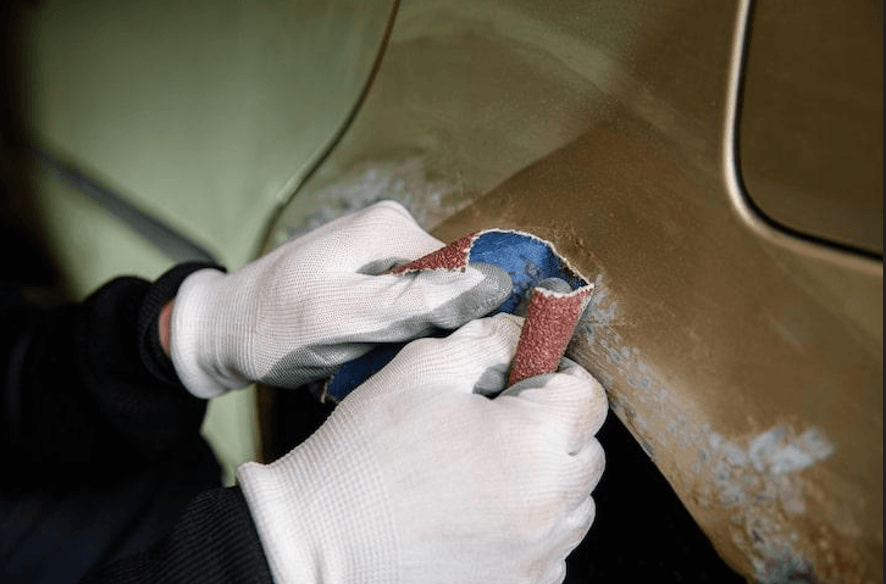
- Precision Sanding: Utilising micro-grade abrasives to level the scratch without thinning the surrounding clear coat
- Down-Draft Booths: Performing the spray process in a pressurised, dust-free environment to prevent microscopic particles from ruining the finish
Common Types of Paint Damage and Repair Approaches
Modern paint damage varies significantly in depth and severity, requiring different levels of repair precision and technology. The table below outlines how contemporary workshops match specific damage types with appropriate repair techniques.
| Damage Type | Severity | Recommended Modern Technique |
| Clear Coat Scratch | Surface level | Multi-stage machine buffing and polishing |
| Primer-Deep Scratch | Medium | Precision paint filling and localised clear coat blending |
| Metal-Deep Scratch | High | Zinc-rich priming, base coat layering, and UV curing |
| Stone Chips | Variable | Computerised paint pen application and leveling |
Table 2: Modern classification of paint damage types and corresponding advanced repair techniques
Sustainability and 2026 Industry Standards
The automotive repair sector is undergoing a green revolution. Beyond just the paint itself, workshops are optimising their energy consumption through the use of high-efficiency spray booths and localised heating systems.
When seeking car paint scratch repair in Melbourne, consumers are increasingly looking for facilities that prioritise waste reduction. Modern mixing systems can calculate the exact amount of paint needed down to the milliliter, virtually eliminating the waste of expensive pigments and chemicals.
- Minimised Overspray: Advanced spray guns (HVLP) ensure more paint lands on the car and less enters the filtration system
- Recycling Protocols: Specialised systems for cleaning tools that recover solvents for reuse
- Digital Documentation: Moving away from paper-based quotes and records to decrease the workshop’s carbon footprint
Preserving Resale Value Through Professionalism
A botched DIY repair or a low-quality ‘touch-up’ can actually decrease a vehicle’s value more than the scratch itself. Prospective buyers and professional inspectors can easily spot ‘dry spray’ or poor colour blending under LED lighting.
By choosing a workshop that utilises the latest technology in car body repair in Melbourne, owners ensure their vehicle retains its market value. A professional repair is documented, warrantied, and – most importantly – indistinguishable from the original factory finish.
See also: Hr Lawyer Toronto: Why Businesses And Employees Need Legal Guidance
All Set for the New Standard for Excellence?
The transition from manual labour to tech-assisted precision has redefined what is possible in automotive aesthetics. Advanced workshops no longer just ‘cover up’ damage; they restore the vehicle to its original specifications using a blend of digital accuracy and chemical engineering. Whether it is a minor door ding or a deep key scratch, modern techniques ensure that the repair is a permanent, high-quality solution. By embracing these advancements, workshops can deliver faster, cleaner, and more accurate results than ever before.
So, if you are in need of any kind of repair, get in touch with the nearest repair company!


 By
By