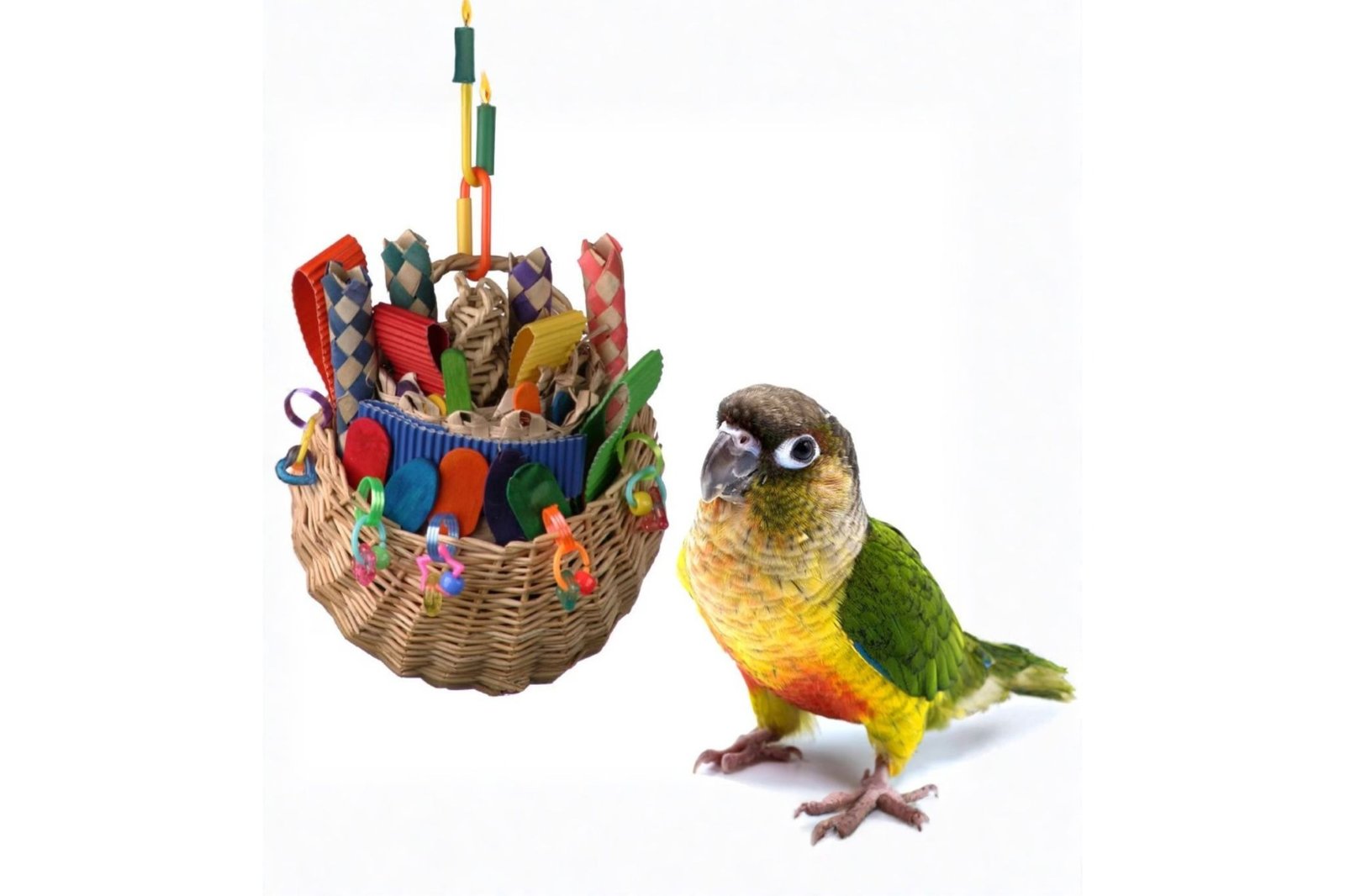

A wooden spoon was once torn by my friend’s conure in less than twenty minutes. That was the moment she stopped treating bird toys as cage decoration. Parrots need a job. The kind of bird who treats your kitchen like a construction site is the target market for Super Bird Creations toys. The entire house becomes calmer when that energy has a suitable outlet.
Why Super Bird Creations Toys Earn a Spot in Every Cage
Wild parrots spend most of their waking hours hunting for food. Your bird finishes breakfast in ten minutes, then stares at four walls. Boredom rushes into that empty space. Screaming, feather plucking, and cage aggression often start right there.
Enrichment closes the gap. Super Bird Creations designs around three instincts birds already have: shredding, chewing, and searching. You are not teaching a new way of life. You are handing your bird a legal way to do what it already wants to do.
The lineup covers a lot of ground. Foraging baskets and treat blocks hide rewards behind cardboard and paper. Bungees and trapezes build grip strength and balance. Instead of fussing over their own chest feathers, hands-on birds can fuss over preening toys.
Although Shredding May Seem Harmful, It is Actually Therapeutic
Many owners panic when a $12 toy turns into confetti in three days. That is the toy working. Destruction is the point. Birds in the wild strip bark, tear leaves, and dismantle seed pods every single day. Paper Fingers, Fatty Bagels, and seagrass wafers all feed that drive. A destroyed toy means a satisfied bird, not wasted money.
See also: Virikson Holidays Luxury Cuba Escapes – Beaches, Culture & Style
Match the Toy to Your Bird, Not to the Price Tag
Size matters more than looks. A macaw will snap a budgie toy in one bite. A cockatiel will ignore a hardwood block it cannot dent. Match the material strength to your bird’s beak.
| Bird Size | Good Starting Picks | What to Look for |
| Finches, budgies, lovebirds | Paper shredders, little activity walls, and tiny bead swings | Light materials, small gaps, soft chew |
| Cockatiels, conures, quakers | Foraging baskets, jungle rings, cardboard treat blocks | Medium wood, layered textures, hidden treats |
| African greys, amazons, eclectus | Bagel cascades, play perches, bungees | Thick wood, stainless hardware, hanging weight |
| Macaws, cockatoos | Heavy-duty hanging toys, large tube bells | Chunky components, reinforced links |
Rotation Beats Buying More
Three toys rotated weekly beat nine toys left up forever. Birds tune out anything static. Try this simple routine:
- Keep three or four toys in the cage at a time.
- Swap one or two every seven days.
- Move the leftovers to a different spot in the cage.
- Store retired toys in a bin and reintroduce them a month later.
Your bird sees “new” without you spending a cent extra.
Pair Enrichment Toys With Lafeber Nutri Berries Parrot Food
Toys to handle the play side. Food can handle enrichment too, and this is where many owners miss an easy win. Seed-only diets are eaten quickly and leave nutritional gaps. Pellets fix the nutrition but bore a lot of birds silly.
Parrot mixes from Lafeber Nutri Berries are positioned in the center. Each berry packs pellets, grains, and seeds into a round cluster that birds have to hold, turn, and pick apart. Dr. T.J. Lafeber, an avian veterinarian, built the brand around that idea back in the 1970s. Feeding becomes an activity instead of a two-minute event.
A few practical ways to use them:
- Place a few berries in a treat block or foraging basket.
- Skewer them on a stainless steel kabob so your bird has to reach.
- Use them as training rewards during harness or recall sessions.
- Hide one under a cardboard flap and let your bird solve it.
Lafeber Nutri Berries Parrot food comes in several flavors, including tropical fruit and El Paso, as well as a senior formula for older birds. Sizes run from small bird blends to macaw and cockatoo clusters. You can browse the full Lafeber range here.
Safety Checks Most Owners Forget
Even well-built toys need supervision. Run through this list every week:
- Check the hardware. Replace any rusted or bent quick link right away.
- Watch rope length. Trim frayed fibers before toes get tangled.
- Skip bells with slotted openings for small birds. Toes and beaks get caught.
- Inspect chewed wood for sharp splinters or exposed staples.
- Hang at the right height. Toys should never block food bowls or landing perches.
Two minutes of checking prevents a very expensive vet visit.
Start Small and Watch What Your Bird Picks
New birds often ignore new objects. That is normal. Place the toy outside the cage for a day or two first. Let your bird study it from a safe distance. Then hang it near a favorite perch, not directly on top of it.
Pay attention to preference. Some birds chew. Some forage. Some just want to swing. Once you know your bird’s style, every future purchase gets smarter.
Foraging-friendly food and Super Bird Creations toys are best purchased together rather than separately. When combined, they occupy the downtime that causes the majority of behavioral issues in parrots kept in captivity. Birdie Boutique has supplied avian nutrition and enrichment for more than 25 years, so the selection leans toward gear that actually holds up.
Start with one foraging toy and one bag of berries. Your bird will show you what to buy next.


 By
By