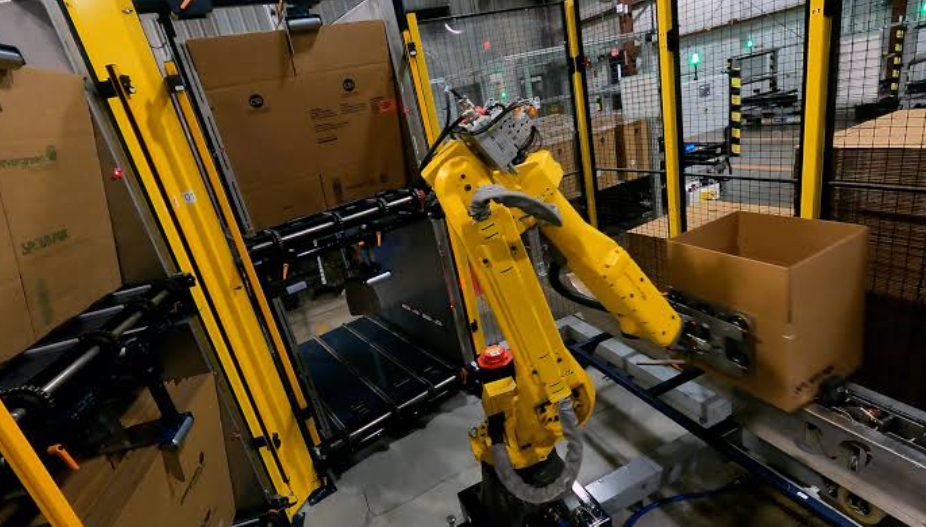

Warehousing and manufacturing industries are undergoing a major transformation as businesses adopt advanced automation technologies to improve efficiency, accuracy, and operational control. Modern companies are managing larger inventories, faster order cycles, and increasingly complex supply chains, making traditional manual processes more difficult to maintain. To meet these challenges, organizations are investing in intelligent systems that streamline operations and improve productivity. Among these technologies, the automatic case erector is becoming a core component of next-generation warehouse and manufacturing automation by improving carton preparation and supporting more connected packaging environments.
Carton forming may appear to be a simple packaging task, but it plays an important role in overall supply chain performance. Before products can be stored, shipped, or delivered, packaging processes must operate smoothly and consistently. Any delay or inconsistency during carton preparation can create disruptions throughout the entire workflow.
As industries continue moving toward smarter facilities, automated packaging solutions are helping businesses create more efficient operations while preparing for the future of connected manufacturing and warehouse management.
The Growth of Automated Warehouses and Factories
Warehouses and manufacturing facilities are becoming increasingly technology-driven.
Businesses are adopting robotics, digital tracking systems, artificial intelligence, and automated equipment to improve how products are produced, stored, and delivered.
This transformation is creating a need for packaging systems that can operate alongside other automated processes.
Carton preparation has become an important part of this connected ecosystem because it influences the speed and efficiency of product movement.
The Importance of Packaging Automation in Modern Operations
Packaging is directly connected to supply chain performance.
A well-organized packaging process helps products move smoothly from production lines to storage areas and distribution centers.
When packaging operations depend heavily on manual work, businesses may experience delays, inconsistent results, and higher labor requirements.
Automation helps create more reliable processes that support faster and more organized operations.
Supporting Faster Warehouse Fulfillment
The growth of e-commerce and global distribution has increased pressure on warehouses.
Companies must process large numbers of orders while maintaining speed and accuracy.
Automated carton preparation helps warehouses create packaging materials quickly and consistently, allowing products to move through fulfillment processes more efficiently.
This support is especially valuable for businesses handling high-volume shipments.
See also: Expert Guide to Selling Your Trade Business
Improving Manufacturing Line Efficiency
Manufacturing facilities depend on smooth coordination between different production stages.
A delay in one area can affect the entire workflow.
Automated carton forming systems help ensure that packaging materials are available when required, reducing interruptions and improving production flow.
Better coordination between manufacturing and packaging creates a more efficient operating environment.
Reducing Manual Workload and Increasing Productivity
Repetitive packaging tasks can require significant employee time and effort.
As businesses grow, managing these tasks manually may become challenging.
Automation allows companies to reduce repetitive workload while enabling employees to focus on more important activities such as quality management, equipment monitoring, and process improvement.
This improves overall workplace productivity.
Enhancing Packaging Consistency
Consistency is essential for businesses that manage large-scale operations.
Every carton needs to be properly formed to support filling, sealing, transportation, and storage requirements.
Manual processes may create variations that affect packaging performance.
Automated systems provide standardized results, helping businesses maintain stronger quality control throughout their operations.
Supporting Smart Manufacturing Environments
Smart manufacturing focuses on creating connected and intelligent production systems.
Factories are increasingly using machines that communicate with each other and share operational information.
Packaging automation fits naturally into this approach by becoming part of a larger network of efficient production processes.
Connected packaging systems help businesses improve visibility, control, and decision-making.
Improving Supply Chain Reliability
A strong supply chain depends on reliability at every stage.
Packaging delays can affect inventory management, shipping schedules, and customer satisfaction.
Automated carton preparation helps reduce these risks by creating dependable packaging workflows.
More reliable operations allow businesses to respond better to market demands and customer expectations.
Helping Businesses Scale Operations
Growth requires systems that can handle increased demand.
A packaging process designed for smaller production levels may not perform effectively when business volumes increase.
Automation provides scalability by allowing companies to expand operations without creating major workflow limitations.
This makes advanced packaging technology valuable for businesses planning long-term growth.
Supporting Different Industrial Sectors
Automated carton preparation solutions are useful across many industries.
Food and beverage companies, retail businesses, electronics manufacturers, pharmaceutical organizations, and logistics providers all require efficient packaging systems.
While each industry has different needs, the importance of speed, accuracy, and reliability remains consistent.
Automation helps businesses create packaging operations that match their specific requirements.
The Future of Warehouse and Manufacturing Automation
The future of industrial operations will depend on greater connectivity and intelligence.
Businesses will continue adopting technologies that improve efficiency, reduce waste, and provide better control over processes.
Packaging systems will become increasingly integrated with automated factories and smart warehouses.
Companies investing in these solutions today will be better prepared for future industrial developments.
Building More Competitive Operations
Efficiency has become a major factor in business success.
Companies that improve their warehouse and manufacturing processes can reduce costs, increase productivity, and provide better customer experiences.
Automation creates opportunities for businesses to strengthen their operations while maintaining consistent quality.
Advanced packaging technology is becoming an important part of building competitive industrial systems.
Final Thoughts
The future of manufacturing and warehousing depends on intelligent automation solutions that improve speed, accuracy, and flexibility. Packaging operations are a vital part of this transformation because they connect production activities with storage and distribution processes. Businesses need reliable technologies that can support growing demands while maintaining consistent performance.
The increasing adoption of the automatic case erector highlights the important role of automated carton preparation in next-generation facilities. By improving workflow efficiency, supporting smart manufacturing, reducing manual challenges, and strengthening supply chain operations, this technology is helping businesses create more advanced and future-ready warehouse and manufacturing environments.


 By
By