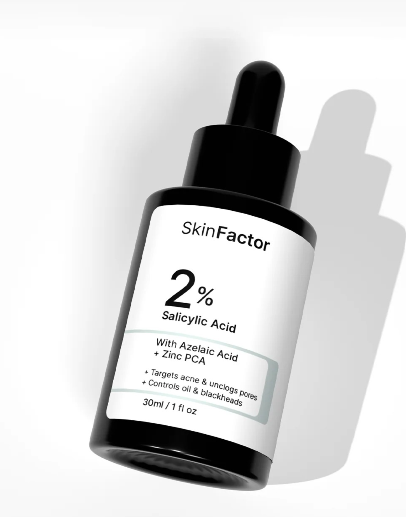

Enlarged pores and persistent acne are two of the most frustrating skin concerns people face, often appearing together since clogged pores are usually the root cause of breakouts. Skin Factor Salicylic Acid Serum has become a popular pick for tackling both issues at once. This article looks at why salicylic acid is so effective for pores and acne, and how this particular serum can fit into a routine aimed at clearer, smoother skin.
Why Salicylic Acid Works So Well for Pores and Acne
Salicylic acid Serum belongs to a class of exfoliants called beta-hydroxy acids (BHAs). What sets it apart from other acids is that it’s oil-soluble, meaning it can dissolve into the sebum (oil) that sits inside your pores rather than just working on the skin’s surface. Acne and enlarged pores are largely driven by the same underlying problem: a buildup of oil, dead skin cells, and bacteria that gets trapped inside hair follicles. Because salicylic acid can actually get inside the pore itself, it’s uniquely suited to clearing out this buildup at the source — not just treating symptoms on top of the skin.
This is the key reason dermatologists so often recommend salicylic acid specifically for oily, acne-prone, and pore-congested skin, as opposed to water-soluble acids like glycolic acid, which tend to work better for surface texture and dullness.
Key Benefits for Pores
1. Deep Pore Cleansing
Skin Factor’s serum penetrates into the pore lining and helps break down the mixture of oil and dead skin cells that causes blockages. Over time, this reduces the frequency of clogged pores forming in the first place.
2. Reduced Appearance of Enlarged Pores
Pores often look larger when they’re stretched out by trapped debris or surrounded by thickened, congested skin. As salicylic acid clears this buildup and encourages healthier cell turnover, pores frequently appear smaller and less noticeable.
3. Fewer Blackheads and Whiteheads
Blackheads form when trapped oil oxidizes at the surface, while whiteheads form when a pore is fully blocked beneath the skin. Regular use of a salicylic acid serum helps prevent both by keeping pores clear before blockages can fully form.
4. Smoother, More Refined Skin Texture
Beyond pores themselves, consistent exfoliation from salicylic acid promotes smoother overall texture, softening the bumpy or uneven feel that congested skin often has.
Key Benefits for Acne-Prone Skin
1. Targets the Root Cause of Breakouts
Because most acne begins with a clogged pore, addressing that blockage directly is one of the most effective ways to prevent new breakouts from forming, rather than only treating pimples after they appear.
2. Anti-Inflammatory Properties
Salicylic acid is chemically related to aspirin and carries mild anti-inflammatory effects. This can help calm the redness and swelling that often comes with active acne, making breakouts look less angry and inflamed.
3. Antibacterial-Supportive Environment
While salicylic acid isn’t a direct antibacterial agent, by keeping pores clear of excess oil and debris, it removes much of the environment that acne-causing bacteria (C. acnes) rely on to thrive.
4. Helps Fade Post-Acne Marks
With consistent use over weeks to months, gentle exfoliation supports faster skin cell turnover, which can help fade the discoloration and marks that acne often leaves behind.
5. Controls Excess Oil
Many people with acne-prone skin also deal with excess shine. Salicylic acid helps regulate the buildup of oil on the skin’s surface, reducing the greasy feel without completely stripping the skin.
How to Use It for Best Results
To get the most benefit for pores and acne while minimizing irritation.
Cleanse first with a gentle cleanser, then pat skin dry.
Apply to dry skin, using a few drops focused on oily zones like the T-zone, or all over if needed.
Start with 2–3 uses per week, especially if you’re new to acids, and increase gradually as your skin builds tolerance.
Always moisturize afterward to prevent excessive dryness, which can actually trigger more oil production and worsen breakouts.
Use sunscreen daily, since exfoliating acids increase sun sensitivity.
Avoid combining with other strong actives (like retinol or vitamin C) until your skin has adjusted, to prevent over-irritation.
Who Should Be Cautious
While salicylic acid is generally well-tolerated, those with very dry, sensitive, or compromised skin barriers should ease in slowly and watch for excessive redness, peeling, or stinging. If irritation persists, reducing frequency or consulting a dermatologist is recommended. Pregnant or breastfeeding individuals should also check with a doctor before starting salicylic acid products as a general precaution.
See also: Orlando Business Law Attorney: Legal Guidance for Growing Businesses in Central Florida
Final Thoughts
For anyone dealing with visible pores, blackheads, or ongoing breakouts, Skin Factor Salicylic Acid Serum offers a targeted way to address the problem at its source rather than just managing symptoms. By clearing pores from within, calming inflammation, and supporting smoother skin texture over time, it addresses both cosmetic concerns (like enlarged pores) and functional ones (like active acne) in a single step. As with any active skincare ingredient, patience and consistency are key — most people start noticing visible improvements in pore clarity and breakout frequency within four to eight weeks of regular, careful use.


 By
By