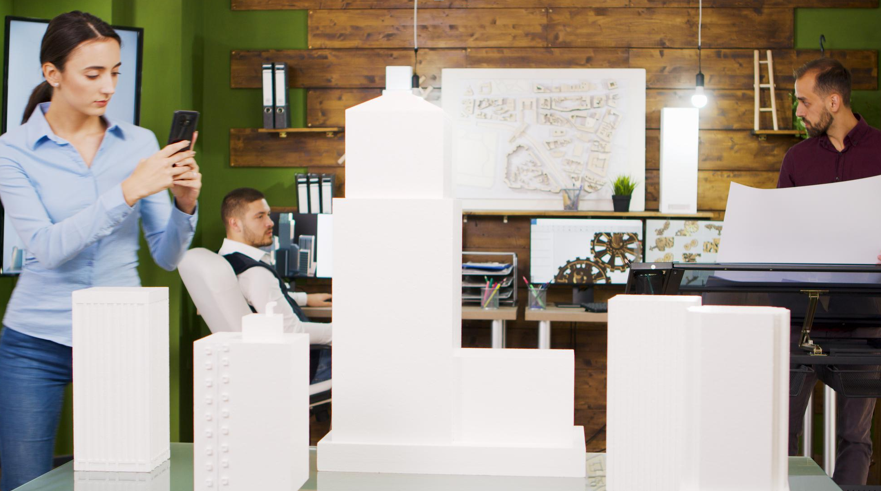

Most businesses fail in brand storytelling, and using printed or digital media can no longer help you do that! To make sure your brand’s story gets recalled, you need to present a 3D printed physical model that grabs the attention of a visitor at an exhibition. Read this blog to know more about why it’s important.
Key Takeaways
- Brand storytelling is important, and not all companies are successful in establishing that among their audience
- This is where a 3D printed physical model comes into play when you are promoting your company at trade fairs or exhibitions
- These models help anchor attention, communicate scale and complexity, create shareable moments, build credibility before a word is spoken, and serve as a long-term brand asset
At a crowded GITEX or Expo Dubai trade event, visitors can walk past hundreds of digital screens. But they are bound to stop in front of a precision-crafted scale model. And when they do, this model should not just be a display product; it should be able to tell a story that no render ever can!
However, 90% of brands think that they are telling stories, but the reality is that they are simply listing the features, throwing a layer of emotional seasoning on top. So, when you do have a model displayed, it needs to target the attention economy problem at exhibitions.
This blog will show how visual noise can make physical tangibility powerful, because exhibition models are not just props but also strategic brand storytelling tools.
What is Brand Storytelling in an Exhibition Context?
Brand storytelling is showcasing a product while creating a narrative about it that resonates with your customers on an emotional level. It works when done through an immersive experience, not just a pitch. In exhibitions, the spatial design, physical artefacts, and tactile engagement help express your brand’s story.
And 3D model making is the first chapter of that story, the first touchpoint that sets the narrative’s tone. Here’s how models compare to other forms of storytelling in exhibitions.
| Storytelling Format | Sensory Engagement | Visitor Recall | Reusability | Trust Signal |
| Digital screen/LED display | Visual only | Low–Medium | High | Medium |
| Printed banner/graphic | Visual only | Low | Low | Low |
| Live demo/staff interaction | Visual + Audio | Medium | None | Medium |
| VR/AR experience | Visual + Audio | Medium–High | Medium | Low (novelty) |
| 3D exhibition scale model | Visual + Tactile | High | High | High |
| Interactive scale model (kinetic/LED) | All senses | Very High | High | Very High |
Table 1: Brand Storytelling Formats Compared
But why is a 3D exhibition scale model a better option? Read on to know the facts.
The Neuroscience Behind Physical Models and Memory
If you are wondering why your investors stop at the model and not at the render, here are some facts that you should know.
- Cognitive psychologist Jerome Bruner suggests that humans are 22 times more likely to remember facts that are presented as a story. It works better than textual words.
- Tactile interaction deepens memory encoding as it can increase recall by around 50%. This makes physical models more memorable than screens.
- Immersive exhibitions increase brand recall by up to 70% compared to conventional presentations.
- 55% of consumers are more likely to recall a brand story rather than a list of simple facts.
So, a model in this context sounds better than a digital render that people might not even care to glance at.
How Exhibition Models Tell Your Brand’s Story
Exhibition models can tell your brand’s story in the following five ways. If your model is made in the best way it can:
1. Anchor Attention – A scale model can create a natural focal point in an exhibition venue, stopping foot traffic that a banner might not be able to. Physical presence can influence dwell time, making people wait and interact with it.
2. Communicate Scale and Complexity – For real estate, maritime, infrastructure, and industrial brands, a physical miniature model can translate the technical complexity into a understood visual. You won’t even need to explain anything separately.
3. Create Shareable Moments – Models are inherently photogenic, that establish organic social content, word-of-mouth, and media coverage. This extends your brand storytelling beyond the booth.
4. Build Credibility Before a Word is Spoken – A precision-crafted 3D printed model can signal commitment to investment, sincerity, and quality. Government bodies and institutional clients can consider the model’s quality to understand your brand’s capability.
5. Serve as a Long-Term Brand Asset – Unlike printed collateral or digital campaigns, a well-designed exhibition model can be reused across multiple events and situations. It can act as your brand’s new image, delivering compounding ROI for a long time.
Who Benefits from the Models and How
The following table shows who can benefit from an exhibit delivered by a professional model making company and how they can ensure proper storytelling.
| Audience | Use Case | Storytelling Goal | ROI Mechanism |
| Real Estate Developers | Master plan/architectural scale model | Pre-sell units before construction | Lead generation at exhibitions; faster sales cycle |
| Industrial/Manufacturing | Factory/plant model | Demonstrate capability to B2B clients | Shortens procurement decision time |
| Maritime/Logistics | Ship/vessel replica | Showcase fleet without transport cost | Pre-sell products; global exhibition use |
| Government/Urban Planning | City/infrastructure model | Communicate public projects to stakeholders | Citizen engagement; investor confidence |
| Technology Companies | Product/hardware model | Make abstract tech tangible | Media coverage; investor trust |
| Creative Professionals/Architects | Portfolio model | Establish design authority | Awards, client acquisition, and press features |
Table 2: Exhibition Models by Audience
Why the Tangibility of Physical Models Wins Over Digital Renders
When it is the decisive moment, something that shows better credibility can make your brand stand out in a hall full of digital screens. Furthermore, if your model is interactive, it seals the deal because visitors get a realistic understanding of your project.
| Decision Factor | Digital Render/Screen | Physical Scale Model |
| First impression speed | Fast | Faster (stops traffic) |
| Perceived brand investment | Medium | High |
| Trust signal for large purchases | Low–Medium | High |
| Media/press appeal | Low | High |
| Reusability across events | High (digital file) | High (durable model) |
| Tactile engagement | None | Strong |
| Integration with digital (QR, AR) | Native | Possible with smart models |
| Suitable for government stakeholders | Moderate | Very High |
Table 3: Physical Model vs. Digital Render at Exhibition
How to Make Your Exhibition Model a Brand Storytelling Asset
So, how do you commission a model for your brand? The following list tells you what to do.
- Ensure precision and scale because inaccurate models can damage brand credibility
- Use premium acrylics, metals, and sustainable materials because materials communicate brand value
- Integrate lighting and kinetics, like LED and moving parts, to increase visitor interaction and dwell time
See also: 5 Urgent Steps to Take After a Gun Arrest in Van Nuys
Get Your Own Exhibition Model That Represents Your Brand’s Story!
If you want to grab the attention of people with your own 3D dynamic model that represents your brand, find a reputed model making company that can help you! In a world saturated with digital content, get a physical model that speaks and interrupts the stereotyped industry patterns. Outlast a trade show with your story!


 By
By