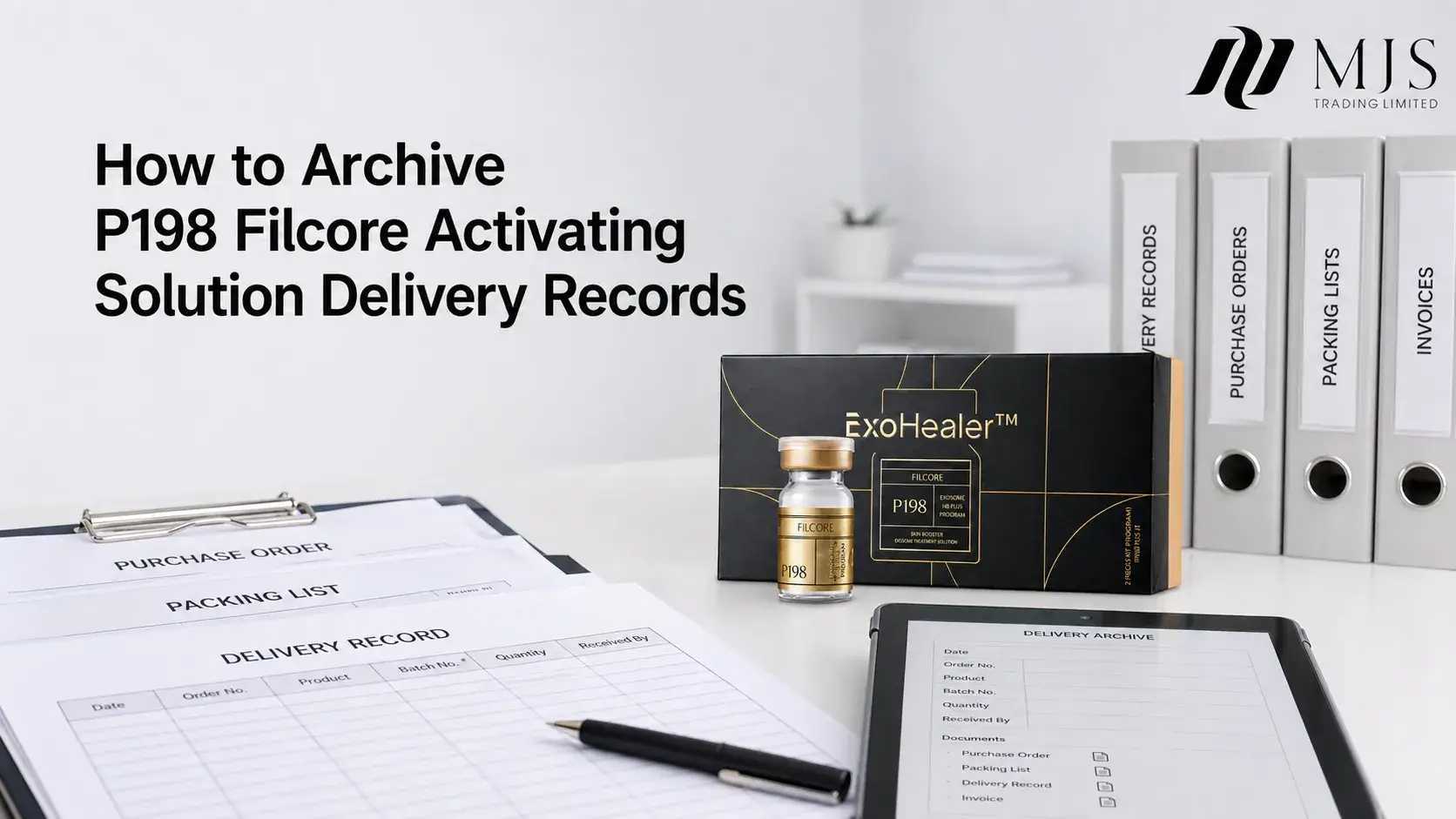

Receiving records are often treated as temporary paperwork, but they become important when a business needs to verify what arrived, investigate a discrepancy or trace a batch back to an order.
The current P198 Filcore Activating Solution listing identifies a 5 mL × 10 presentation. A receiving file should preserve the commercial identity and packaging details visible on the delivered goods without adding assumptions about application or performance.
A connected archive makes the order, packing information, product identifiers and follow-up correspondence retrievable under one reference.
Start With a Controlled Information Structure
A useful delivery archive system separates stable identity fields from information that changes with each quotation, delivery or review. The team should know who owns every field, which source supports it and when it was last checked.
| Record field | What to capture |
| Order reference | Purchase-order and supplier invoice numbers |
| Product identity | Exact name and presentation received |
| Package check | Quantity and visible condition |
| Traceability | Batch, lot and expiry information where present |
| Documents | Packing list and other accompanying records |
| Resolution | Action taken for any shortage, damage or mismatch |
Fields should be completed from identifiable sources. Supplier statements, packaging, invoices, manufacturer materials and regulator databases serve different purposes; the record should not imply that one source proves everything about a product.
A Practical Workflow
The following sequence can be adapted to P198 Filcore Activating Solution while keeping clinical and regulatory decisions with appropriately qualified professionals:
- Open the approved purchase order before checking the shipment.
- Photograph unopened outer packaging when useful for the record.
- Match product identity and quantity to the order.
- Record identifiers directly from labels and documents.
- Separate questionable goods while discrepancies are reviewed.
- Archive the completed record under the purchase-order number.
Use Catalogue Research Carefully
During early research, teams may review P198 Filcore Activating Solution to understand how the product or category is presented. That commercial reference should be followed by the organization’s own verification, approval and destination-market checks.
Availability on an international website does not by itself establish that a product may be imported, supplied or used in a particular jurisdiction. Requirements can differ by product, intended use and market.
Keep Evidence and Marketing in Separate Fields
Product identity, ingredient or composition statements, promotional wording and evidence-based conclusions should not be merged. A disciplined record shows what the source actually says and avoids converting a catalogue statement into a medical conclusion.
Where a claim affects safety, professional use, authorization or clinical interpretation, it should be escalated to the appropriate qualified reviewer. General operations staff can preserve and route information without independently validating a clinical conclusion.
See also: Orlando Business Law Attorney: Legal Guidance for Growing Businesses in Central Florida
Common Mistakes to Avoid
- Discarding the shipping label before the check is complete
- Recording product details from memory
- Mixing documents from different orders
- Using delivered goods before resolving a material mismatch
- Saving photographs without a searchable order reference
Build Records That Can Be Updated
A useful record has an owner, review date and change history. New information should create a documented revision rather than silently replacing the previous version. Open purchase orders and inventory records should be checked whenever a material field changes.
For broader catalogue and enquiry context, teams can also review MJSBeautys. The same internal controls should be applied regardless of which catalogue or supplier is being considered.
Frequently Asked Questions
Why use a structured record instead of email?
A structured record makes the same fields searchable and comparable. Email can remain supporting evidence, but it should not be the only place where a decision or product detail is stored.
Who should own updates?
Ownership depends on the field. Procurement may own quotations, inventory staff may own receiving data, and qualified clinical or regulatory reviewers should own conclusions within their scope.
How often should the information be reviewed?
There is no universal interval. The organization should set a risk-based schedule and also trigger review when packaging, suppliers, documents, availability or applicable requirements change.
Can a catalogue page confirm local authorization?
No. Catalogue availability and local authorization are different questions. Buyers should use the official sources and professional advice applicable to their destination market.
A Practical Next Step
Choose one recent delivery and reconstruct the complete file. Documents that cannot be found quickly reveal where the receiving workflow needs a clearer owner.
The strongest systems are not the most complicated. They are the ones that let another authorized employee understand what was recorded, where it came from, what remains uncertain and what action should happen next.
